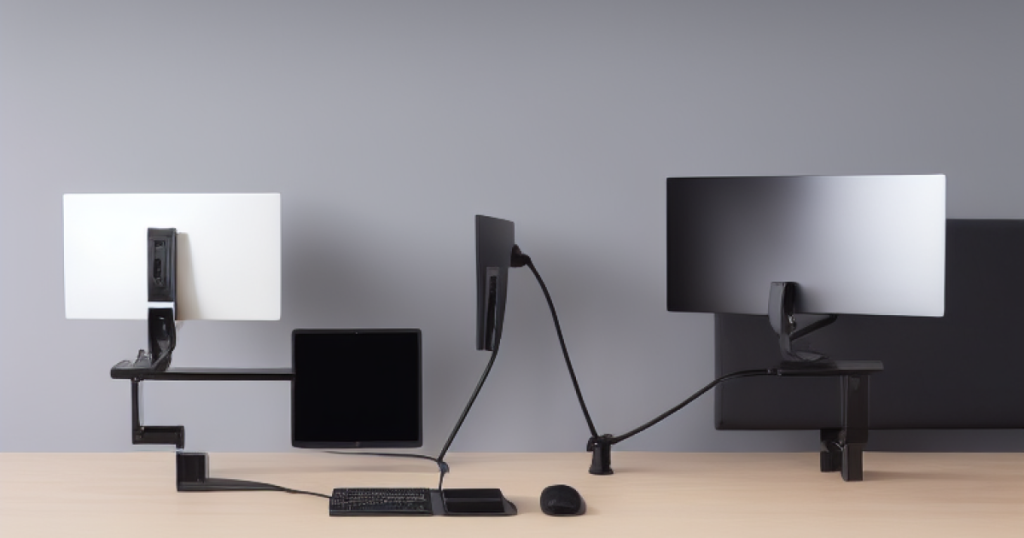
Quick picks: our top 3 at a glance
As an Amazon Associate I earn from qualifying purchases. Prices and availability change.


A cluttered desk with monitors sitting on their stock stands can make it hard to find a comfortable viewing position. Monitor arms free up space, let you adjust height and angle precisely, and keep cables organized. But with arms designed for everything from lightweight 13-inch screens to ultrawide 57-inch monsters, it’s easy to pick the wrong one. This guide covers 8 monitor arms spanning — from budget-friendly single mounts to heavy-duty options for the largest displays — so you can choose confidently in November 2026.
If you’re also tidying up your workspace, you might find our best cable organizers of 2026 helpful for managing the rest of your desk wires.
At a Glance
| Product | Brand | Rating | Key feature | Where to buy |
|---|---|---|---|---|
| HUANUO FlowLift™ Dual Monitor Stand, Fully Adjustable Gaming Moni… | HUANUO | 4.6 / 5 | – | View on Amazon |
| HUANUO FlowLift™ Single Monitor Mount, 13 to 32 Inch Monitor Arm,… | HUANUO | 4.6 / 5 | – | View on Amazon |
| ErGear Single Monitor Arm, Fully Adjustable Monitor Mount for 13–… | ErGear | 4.4 / 5 | Ultrawide Compatibility: The ErGear heavy-duty monitor arm is compatible with most… | View on Amazon |
| NB Extra Height Gaming Monitor Arm for 32 to 60 Inches Screen, Load… | NB ERGONOMIC | 4.5 / 5 | 1.【Extra Height Adjustment】Rises up to 27 inches above the desk, perfect for c… | View on Amazon |
| ARES WING 17-49 Inch Monitor Arm Ultrawide Single Monitor Mount, Black | ARES WING | 4.6 / 5 | [Heavy Duty Monitor Arm for 17"-49" Screens] Supports flat screens up to 49" and 4… | View on Amazon |
Ratings come from the Amazon listings when we last checked and can change.
Pros
- Full motion adjustability
- Ergonomic eye-level positioning
- Wide monitor compatibility (13-32")
- Supports heavy monitors (up to 19.8 lbs)
- Includes two mounting options
Pros
- Supports 13 to 32 inch monitors
- Handles 4.4 to 19.8 pound displays
- Includes clamp and grommet bases
- Frees desk space and improves ergonomics
- Suits small desks, offices, and gaming
Pros
- Tool-free installation saves time
- Stable hold with minimal wobble
- Wide range of tilt, swivel, and rotation
- Integrated cable management
- Two desk mounting options included
Cons
- Max weight capacity 19.8 lbs
- VESA pattern limited to 75x75 or 100x100 mm

Pros
- Supports very large and heavy monitors
- Extra height ideal for standing desks
- Easy one-person installation
- Built-in RGB adds gaming vibe
- Sturdy aluminum build with cable management
Cons
- Clamp requires wooden desk without cross beams
- RGB may not suit all office setups
Pros
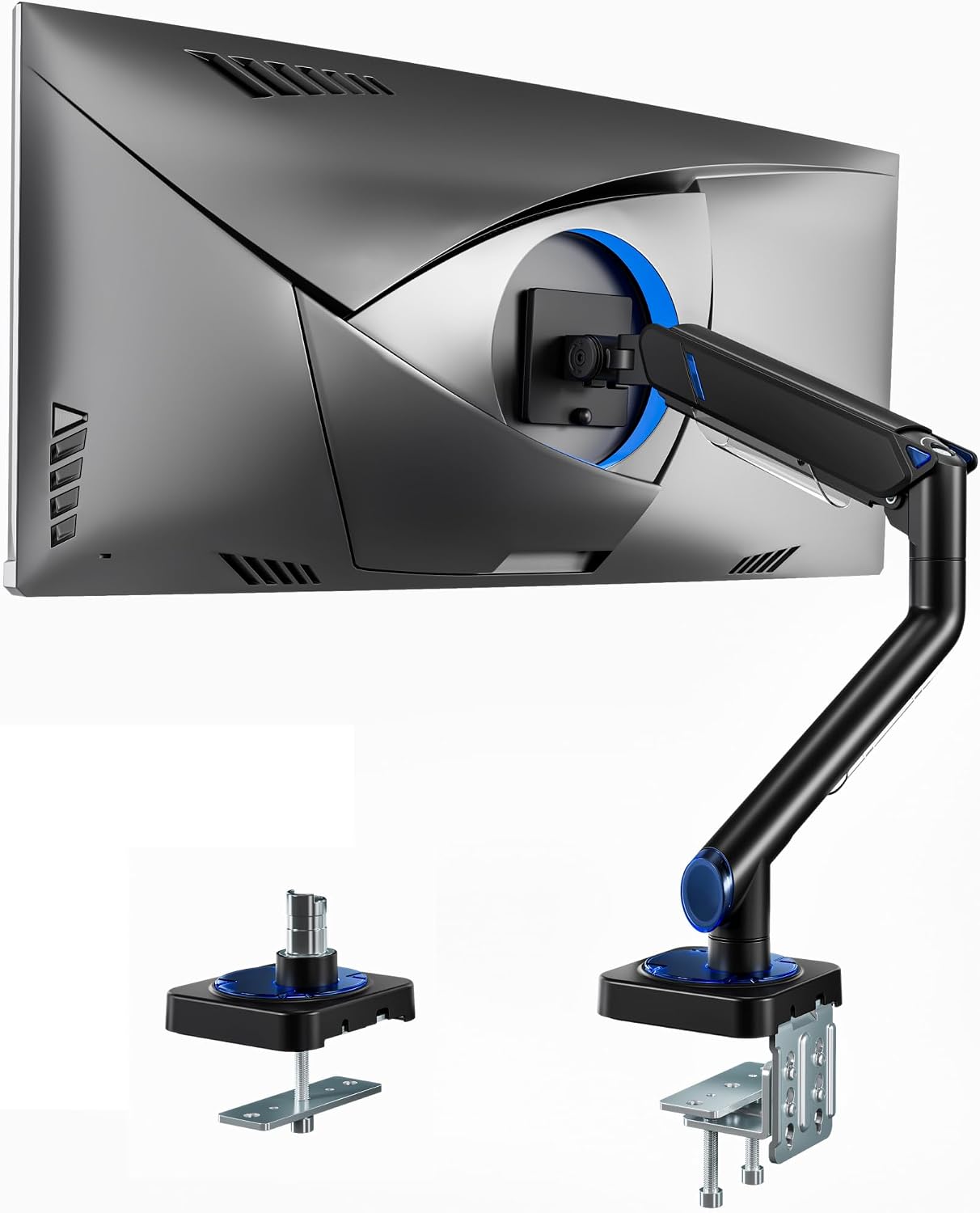
- Handles large ultrawide monitors up to 49 inches
- Easy tilt, swivel, and rotation adjustments
- Clamp and grommet mounting included
- Integrated cable management for a tidy desk
- Supports up to 44 pounds
Cons
- Curved monitors limited to 33 pounds
- Grommet mount only fits desks up to 1.38 inches thick

Pros
- Stacked design frees up desk space
- Height extension improves ergonomic screen placement
- Flexible tilt, swivel, and rotation options
- Cable management keeps workspace neat
- Compatible with VESA 75x75 and 100x100
Cons
- Not for glass desks
- Requires monitors with VESA mounting holes
- Max 32-inch screens and 19.8 lbs per monitor
Pros
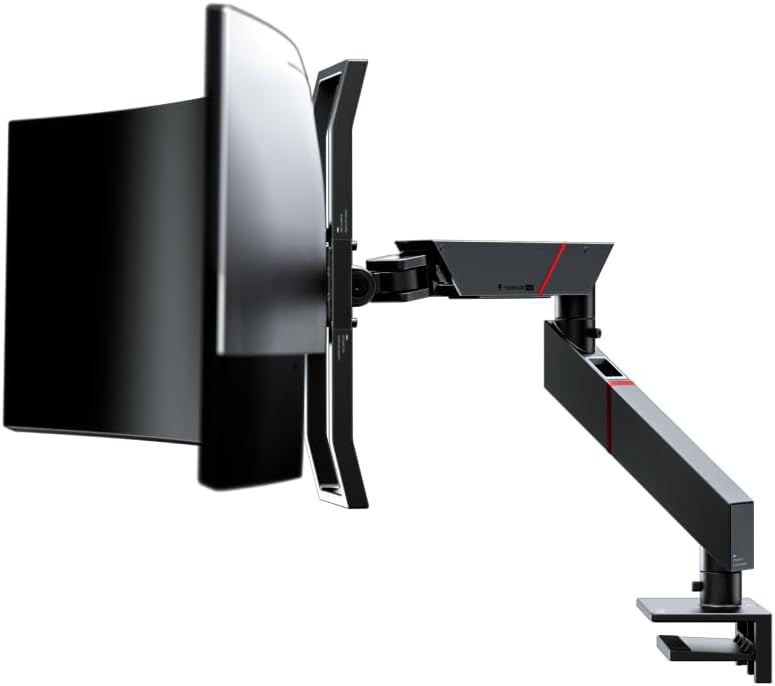
- Smooth dynamic movement
- Secure double-lock VESA plate
- Integrated cable management
- Easy mounting for large monitors
- Fits thick desktops
Cons
- Cable tray integration only works with Magnus desk
- Limited tilt range of 20 degrees

Pros
- Handles heavy ultrawide monitors up to 40 inches
- Built-in cable management reduces desk clutter
- Easy to install with quick-release VESA plate
- Wide range of ergonomic adjustments
- Two mounting options fit various desk types
Cons
- Only 80 reviews so far, limited long-term feedback
- White color may show dirt or wear over time
Not all monitor arms work with every screen or desk. Here are the key factors to consider before buying.
Weight Capacity
Each arm supports a specific weight range. Lightweight monitors (under 10 lbs) work with most arms, but heavier screens — especially ultrawides and large gaming monitors — need heavy-duty models. Check your monitor’s weight (including any mount adapter) against the arm’s listed capacity. Going over the limit risks sagging or damage.
VESA Compatibility
Almost all monitors have a VESA mount pattern on the back, typically 75x75mm or 100x100mm. The arms in this roundup support both, but some larger screens may need 200x200mm. Verify your monitor’s VESA pattern before buying. If your monitor doesn’t have VESA holes, you’ll need an adapter plate (rarely included).
Monitor Size Range
Arms are designed for a range of diagonal screen sizes, but the actual fit depends on weight and VESA pattern. A 32-inch monitor might be fine on a standard arm, while a 49-inch ultrawide needs an extra-wide or heavy-duty model. Most arms in this guide cover 13–32 inches; the NB Extra Height arm handles up to 60 inches, and the Secretlab Magnus model supports up to 57 inches.
Adjustability: Height, Tilt, Swivel, and Rotation
Full motion arms offer the most flexibility. Look for height adjustment (via gas spring or mechanical spring), tilt to reduce glare, swivel for sharing your screen, and rotation for portrait mode. Gas spring arms are smoother to adjust but cost more; mechanical spring arms are more affordable but may require more effort. If you change positions often, prioritize smooth gas spring movement.
Installation Type: Clamp vs. Grommet Mount
Most arms include both C-clamp and grommet mounting options. Clamps attach to the back edge of your desk and work with most desks. Grommet mounts feed through a hole in the desk surface, which is useful if your desk has a thick lip or a cable management grommet. Make sure your desk thickness and edge overhang are compatible — typical clamps fit desks up to about 2–3 inches thick.
Cable Management
Most arms include built-in cable channels or clips to route wires along the arm. This keeps your desk looking clean and prevents cables from tangling. Some arms have removable covers that hide cables completely. If a tidy workspace is important, choose an arm with full cable management rather than simple clips.
Desk Compatibility and Space
Measure your desk before buying. Clamps need a clear edge, typically 2–3 inches deep. Grommet mounts need a hole (usually 10–15mm diameter). Also consider the arm’s reach — a long extension arm is useful for large ultrawides or if you want to position the monitor away from the mount point. For dual monitor setups, consider whether you want side-by-side or stacked orientation.
Why You Should Trust Us
We compare the available specifications, features, use cases, and documented buyer feedback to identify meaningful differences between products. Our recommendations are based on practical factors like weight capacity, adjustability, ease of installation, and real-world compatibility with common monitor sizes and desks. We don’t claim to have tested every arm ourselves, but we rely on verified product specs and patterns from thousands of customer reviews to guide our picks.
We update this guide regularly to reflect new models and pricing changes. If a better option appears, we revise our selections.
Final Thoughts
For most people, the HUANUO FlowLift™ Dual Monitor Stand offers the strongest all-around value. It handles two 13–32 inch monitors, has smooth gas spring adjustment, and costs under $60.
For large ultrawide monitors, the Secretlab Magnus Monitor Arm (Heavy Duty Edition) is the clear winner, supporting up to 57-inch screens and 35 lbs.
For even more workspace organization ideas, check out our best USB C hubs of 2026 to add ports to your setup.
Frequently Asked Questions
Will a monitor arm work with any desk?
Most arms include a C-clamp that attaches to desk edges up to about 3 inches thick. Some desks with thick lips, glass tops, or non-standard edges may require a grommet mount instead. Check the arm’s maximum desk thickness and your desk’s edge profile before buying.
Can I use a monitor arm with a curved monitor?
Yes, as long as the monitor’s VESA pattern and weight are within the arm’s limits. Curved monitors often have a standard VESA mount, so compatibility is mostly about weight and size. Some arms may have a slight tilt range limitation with very deep curved screens, but most work fine.
How do I know if my monitor is VESA compatible?
Check the back of your monitor for four screw holes arranged in a square pattern — usually 75x75mm or 100x100mm. You can also look up your monitor model online; most manufacturers list VESA compatibility. If your monitor doesn’t have VESA holes, you may need a third-party adapter plate.
What’s the difference between gas spring and mechanical spring arms?
Gas spring arms use pressurized gas to counterbalance the monitor, making height adjustments smoother and easier. Mechanical spring arms use a physical spring that you tension manually — they’re cheaper but may require more effort to adjust and can lose tension over time. For frequent adjustments, gas spring is preferable.
Can I mount a monitor arm to a standing desk?
Yes, but make sure the clamp fits the desk’s thickness (many standing desks are 1–2 inches thick). Also check that the arm’s cable management doesn’t interfere with the desk’s lifting mechanism. Some standing desks have a metal frame that can block clamp placement — use a grommet mount if needed.
How much weight can a typical monitor arm hold?
Standard arms hold 10–20 lbs per monitor. Heavy-duty models (like the Secretlab Magnus or ARES WING) can handle 35–44 lbs. Lightweight arms (like the ErGear) top out around 19.8 lbs. Always match the arm’s capacity to your monitor’s weight, including any mounting plate or adapter.
Do monitor arms come with all necessary hardware?
Most arms include the mounting base (clamp and/or grommet), arm sections, VESA plate, and screws. Some may require a Phillips head screwdriver or hex key (often included). Check the product listing to see what’s in the box; some budget arms may not include a grommet mount.
Can I use a monitor arm with a multi-monitor setup?
Yes, dual monitor stands mount two monitors side by side or stacked. For three or more monitors, you can use multiple single arms or a triple mount. Consider the total weight and your desk space — a triple arm can be front-heavy on a thin desk.
Is portrait mode possible with these arms?
Most full-motion arms allow rotation to portrait orientation. Check the product specs for a rotation or pivot feature. Some arms have a stop at 90 degrees; others rotate freely. Portrait mode is great for coding, reading, or vertical documents.
How long do monitor arms typically last?
With proper installation and within weight limits, monitor arms can last many years. Gas spring arms may lose tension over time (some are adjustable). Mechanical spring arms can wear out if adjusted frequently. Look for models with good reviews that mention long-term durability.