Disclosure: As an Amazon Associate I earn from qualifying purchases. This article may contain affiliate links, and we may earn a commission at no extra cost to you.
If you are trying to cut back on oil for healthier cooking, an oil sprayer is a simple tool that gives you control. Instead of pouring from a bottle and guessing how much lands in the pan, a sprayer lets you coat food evenly with a fine mist. That matters for air frying, roasting, grilling, and even salads, where a little oil goes a long way.
The challenge is that not all oil sprayers work the same way. Some spray a fine mist, others offer both spray and pour modes, and some are better suited for high-heat cooking than others. With so many options, it is easy to end up with a bottle that clogs, leaks, or feels awkward to use. This guide covers 5 practical options in September 2026 to help you match a sprayer to how you actually cook.
Pros
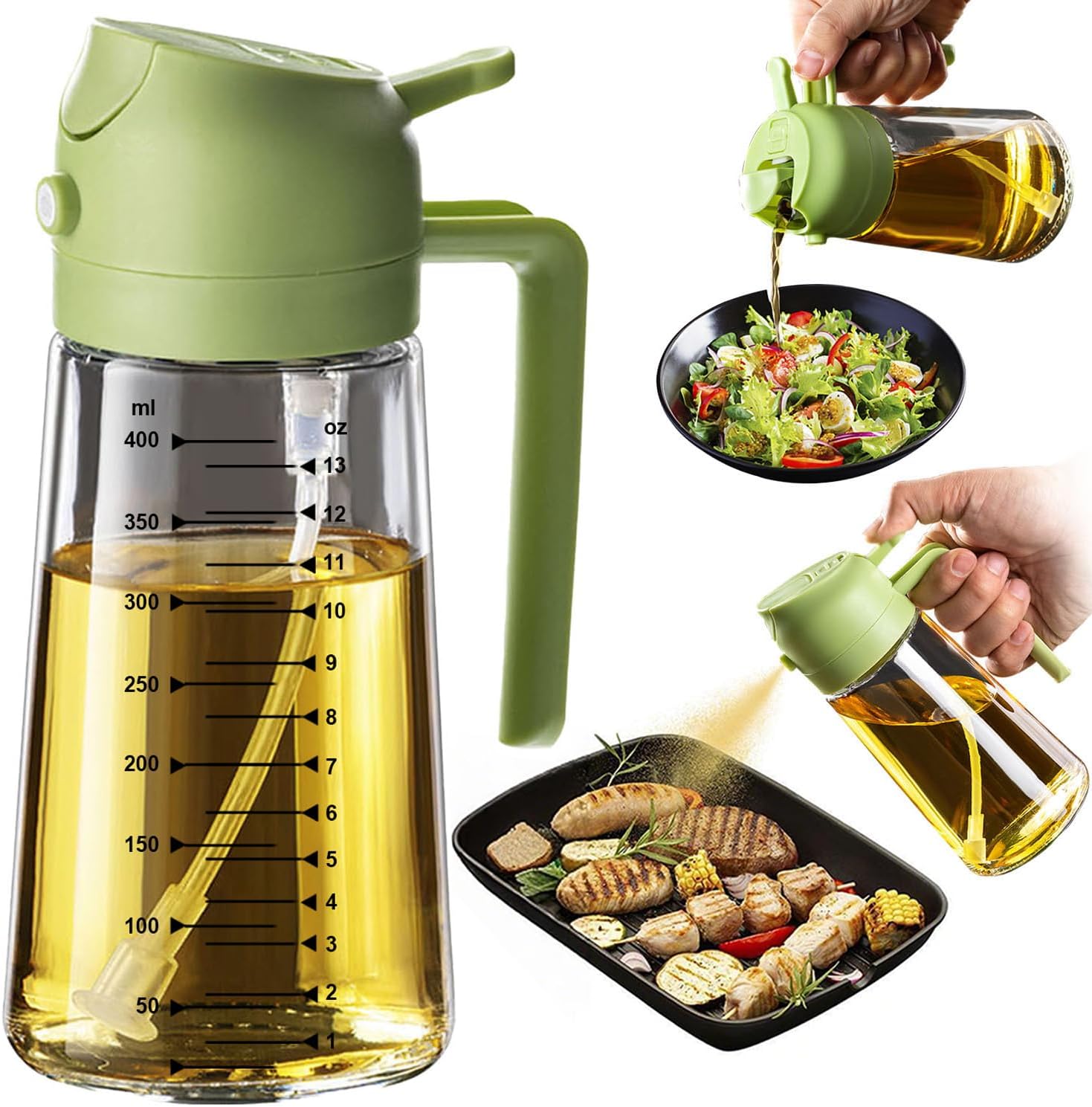
- Dual spray and pour options
- Precise 0.15g oil per spray
- BPA-free glass, safe and durable
- Lifetime support for peace of mind
- Fine mist or steady stream control
Cons
- Lid not dishwasher safe

Pros
- Fine, even mist spray
- Portion control per stroke
- Leakproof and anti-drip
- Easy to refill and clean
- Works with various liquids
Cons
- Glass bottle can break if dropped
- Requires hand washing only

Pros
- Fine mist for even coverage
- Leakproof and anti-drip design
- Works with many cooking oils
- Easy to refill and clean
- Durable glass construction
Cons
- Hand wash only

Pros
- Dual spray and pour functionality
- Fine mist for light oil application
- Transparent glass shows remaining oil
- Easy to refill with wide neck
- BPA-free and lead-free materials
Cons
- Hand wash only; not dishwasher safe
- Plastic spray mechanism may feel less durable

Pros
- Keeps oil fresh by blocking light
- Sprays a fine, consistent mist
- Works as both sprayer and pourer
- Easy to refill without spills
- Durable glass resists breaking
Cons
- Hand wash only
When you are choosing an oil sprayer, the right pick depends on how you cook, how often you plan to use it, and what you value most. Here are the key factors to consider before you buy.
Spray vs. Pour Functionality
Some oil sprayers only spray, while others let you switch between a fine mist and a direct pour. If you mostly need to coat a pan or air fryer basket, a spray-only model is simple and effective. But if you also want to drizzle oil over salads or roast vegetables, a 2-in-1 design gives you more flexibility without needing a separate bottle.
Consider what you cook most often. For everyday cooking where portion control matters, a sprayer that delivers a consistent mist is key. If you often need a larger amount of oil for marinades or dressings, having the pour option can save time and reduce mess.
Material and Build Quality
The material of the bottle affects both durability and how the oil tastes. Glass bottles are a common choice because they do not react with oil and are easy to clean. Some glass bottles come with a protective coating to block sunlight, which helps keep oil fresh for longer. Plastic options are lighter and less likely to break if dropped, but make sure they are BPA-free and food-grade.
Think about where you will store the sprayer. If it sits on the counter, a glass bottle with a sleek design looks nice. If you plan to take it to a picnic or BBQ, a lighter, unbreakable option might be more practical.
Oil Control and Portion Size
One of the main reasons to use an oil sprayer is to control how much oil you use. Different sprayers dispense different amounts per spray, so check the product details if portion control is important to you. Some models spray as little as 0.15 grams per pump, while others might spray around 0.2 grams. This matters if you are tracking calories or following a low-fat diet.
Keep in mind that a finer mist usually means better coverage with less oil. A coarser spray might be fine for greasing a pan but not ideal for getting an even coat on vegetables or fish.
Ease of Refilling and Cleaning
Refilling an oil sprayer can get messy if the opening is small. Look for a wide mouth opening that lets you pour oil in without a funnel. Some models are designed to be easy to clean by hand, while others might have parts that are more complicated to take apart.
Consider how often you will refill it. A larger capacity bottle, like 16 ounces, means fewer refills, which is convenient if you cook often. But a smaller bottle might be easier to handle and store.
Nozzle Design and Clog Resistance
A common frustration with oil sprayers is clogging. Look for a nozzle that is designed to resist clogs, and consider whether the product includes a filter system. Some sprayers have a built-in filter to prevent particles from blocking the nozzle, which is especially useful if you use infused oils or homemade dressings.
Also, pay attention to the spray pattern. A fan-spray nozzle tends to give a wider, more even coat, while a single-stream nozzle might be better for precise applications. Think about what you cook and how you like to apply oil.
Leak-Proof and Drip-Free Operation
No one wants oil leaking all over the counter or inside a drawer. Look for sprayers with a leak-proof design and an anti-drip trigger. Some models have a special buckle or lock mechanism to prevent accidental spills, which is handy if you plan to store the bottle on its side or carry it with you.
If you plan to take your oil sprayer to a BBQ or picnic, a secure closure is essential. Check if the product mentions a leak-proof feature or a locking mechanism in the description.
Intended Use and Versatility
Think about the different ways you might use an oil sprayer. It is not just for cooking. You can use it to grease baking pans, add a light mist to salads, or even spray water for certain baking techniques. Some sprayers work with a variety of liquids, like olive oil, avocado oil, soy sauce, or cooking wine, which adds to their versatility.
If you are an avid home cook who uses different oils and condiments, a sprayer that can handle various liquids is a better investment. If you only need it for one type of oil, a simpler model might be all you need.
For more practical kitchen buying guides, visit our Kitchen hub.
Why You Should Trust Us
We compare the available specifications, features, use cases, and documented buyer feedback to identify meaningful differences between products. Our goal is to help you make a confident decision based on what matters most to you, whether that is oil control, ease of use, or versatility.
We do not claim to have tested these products ourselves. Instead, we rely on the information provided by the manufacturers and the experiences shared by other buyers to highlight practical considerations and potential trade-offs.
Final Thoughts
For most home cooks, the TrendPlain 16oz/470ml Glass Olive Oil Sprayer offers a strong balance of function and value. Its dual spray and pour design, combined with a precise nozzle and BPA-free glass, makes it a versatile addition to any kitchen. It is a solid all-around choice for everyday cooking.
If you are looking for a more premium option with advanced features, the FLAIROSOL OLIVIA. The Original Advanced Oil sprayer is worth considering. It uses patented technology to deliver a consistent mist and is trusted by chefs. While it costs more, it offers excellent control and durability, making it a good pick for those who cook frequently and want a reliable tool.
For budget-conscious shoppers who still want a dependable sprayer, the YARRAMATE 16 oz Dark Glass Olive Oil Sprayer is a practical option. It offers both spray and pour functions, a protective coating for the glass, and a large capacity, all at a very accessible price point. It is a great value for those who want the basics without extra frills.
Frequently Asked Questions
What is the best oil sprayer for cooking?
The best oil sprayer for cooking depends on your needs. If you want a reliable, versatile option, look for one with both spray and pour functions, like the TrendPlain 16oz/470ml Glass Olive Oil Sprayer. For more precise control and a finer mist, the FLAIROSOL OLIVIA models are popular choices.
How do I clean an oil sprayer?
Most oil sprayers can be cleaned by hand with warm, soapy water. Some models have removable parts that make cleaning easier. Check the product instructions for specific guidance. Avoid putting plastic parts in the dishwasher unless the manufacturer says it is safe.
Can I use an oil sprayer with any type of oil?
Most oil sprayers work well with a variety of oils, including olive, avocado, canola, and vegetable oil. Some sprayers can also handle other liquids like soy sauce or cooking wine. Check the product description to see which liquids the sprayer is compatible with.
Why does my oil sprayer clog?
Clogging can happen if the oil contains particles or if the nozzle is not cleaned regularly. Some sprayers have a built-in filter to help prevent this. To reduce the risk, use filtered oil and clean the nozzle after each use.
How much oil does a sprayer use per spray?
The amount of oil dispensed per spray varies by model. Some sprayers dispense around 0.15 grams per spray, while others might spray about 0.2 grams. Check the product specifications if portion control is important to you.
Are glass oil sprayers better than plastic ones?
Glass oil sprayers are often preferred because they do not react with oil and are easier to clean. They also look nicer on the counter. Plastic sprayers are lighter and less likely to break, but make sure they are BPA-free and food-grade.
Can I take an oil sprayer with me when traveling?
Yes, many oil sprayers are designed to be portable. Look for a model with a secure, leak-proof lid if you plan to pack it. Some sprayers have a locking mechanism to prevent accidental spills during transit.
What is the difference between a sprayer and a mister?
In general, a sprayer uses a pump mechanism to create a fine mist, while a mister might use a different mechanism. The terms are often used interchangeably. The key is to look for a sprayer that delivers the mist consistency you want.
How long does an oil sprayer last?
The lifespan of an oil sprayer depends on the build quality and how well you maintain it. With proper care, a good sprayer can last for years. Regular cleaning and avoiding harsh detergents can help extend its life.
Are oil sprayers worth it?
Yes, oil sprayers are worth it if you want to control your oil intake and cook healthier meals. They also help you use less oil, which can save money over time. Plus, they are convenient for evenly coating food for air frying, roasting, and grilling.
This guide is for shopping research only and is not medical, health, or safety advice. Product details, availability, and prices can change; confirm current information with the manufacturer or retailer. If you are buying a mobility, wellness, or health-related product for a medical condition, recent surgery, fall risk, pain, neuropathy, circulation issues, or a care plan, consult a qualified healthcare professional before use.