Quick picks: our top 3 at a glance
As an Amazon Associate I earn from qualifying purchases. Prices and availability change.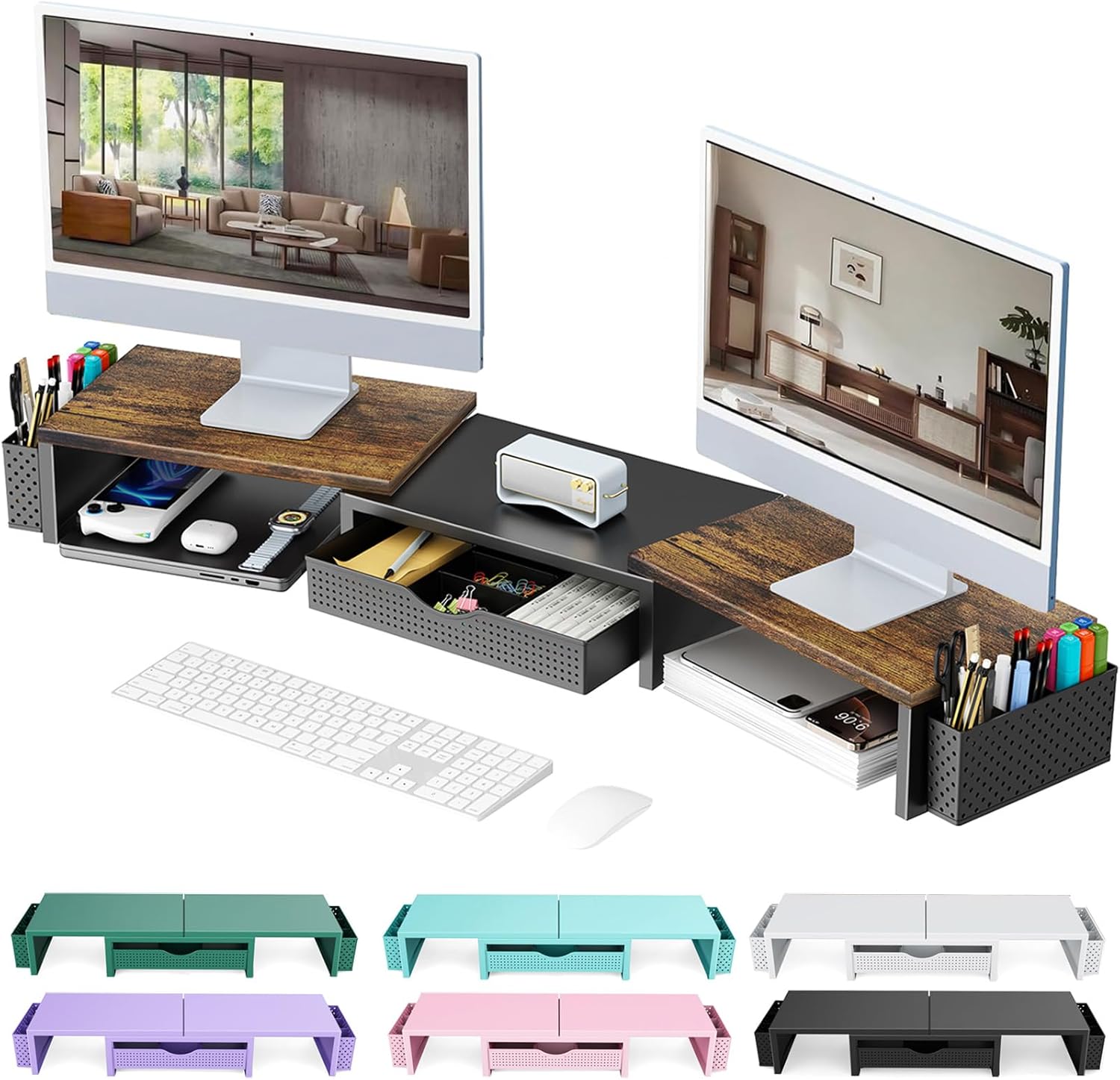


If your desk feels cramped or your neck strains from looking down at a screen that sits too low, a monitor shelf is a simple fix. These risers lift your monitor or laptop to eye level, freeing up space underneath for a keyboard, notebook, or small accessories. But not every shelf suits every desk—some are extra wide for dual monitors, others include drawers for small storage, and a few adjust in height or angle.
We sorted through the available options to find 8 monitor shelves that cover different needs: single and dual monitor setups, wood and metal builds, and prices. Whether you’re outfitting a home office or a dorm desk, this guide will help you match the right shelf to your space and workflow. If you’re also tidying cables, check out our best cable organizers guide for complementary desk solutions.
At a Glance
| Product | Brand | Rating | Key feature | Where to buy |
|---|---|---|---|---|
| gianotter Dual Monitor Stand Riser With Drawer and 2 Pen Holders | gianotter | 4.5 / 5 | 【Ample Storage Space】The dual monitor stand features two magnetic pen holders… | View on Amazon |
| Spacrea Dual Monitor Stand Riser with Drawer and 2 Pen Holders | Spacrea | 4.5 / 5 | – | View on Amazon |
| Simple Trending Monitor Stand with Drawer, 2-Tier Laptop Stand, Black | Simple Trending | 4.7 / 5 | 【ERGONOMIC HEIGHT – RELIEVE NECK & SHOULDER STRAIN】Raise your screen to eye… | View on Amazon |
| Simple Trending Dual Monitor Stand Riser with Mouse Pad, Black | Simple Trending | 4.7 / 5 | 【ERGONOMIC 7" HEIGHT – RELIEVE NECK & BACK STRAIN】Raise your screens to eye… | View on Amazon |
| Computer Monitor Stand Riser for Desk, 3 Height Adjustable PC Lapto… | Canyora | 4.7 / 5 | Comfortable Viewing Experience: The computer monitor stand riser has 3 adjustable… | View on Amazon |
Ratings come from the Amazon listings when we last checked and can change.
Pros
- Reduces neck and eye strain
- Integrated drawer and pen holders
- No assembly needed
- Maximizes usable desk space
- Sturdy metal and wood build
Cons
- May not fit extra-wide monitors
- Drawer depth is limited
Pros
- Ergonomic height adjustment
- Built-in drawer for hidden storage
- Two pen holders for quick access
- Sturdy metal build
- Saves desk space
Pros
- Reduces neck and shoulder strain
- Keeps devices cool with mesh design
- Includes drawer and pen holders
- Non-slip suction cups for stability
- Sturdy metal construction

Pros
- Reduces neck and back strain
- Mesh cooling prevents overheating
- Sturdy metal frame holds up to 100 lbs
- Large mouse pad included
- Non-slip suction cups for stability

Pros
- Adjustable height for ergonomic comfort
- Quick tool-free assembly
- Holds up to 44 pounds
- Includes phone holder
- 2-pack for dual monitors or multiple uses

Pros
- Adjustable length fits different desk sizes
- Swivel shelves for angled or corner layouts
- Ergonomic height reduces neck and back strain
- Built-in storage and cable management
- Quick and easy assembly

Pros
- Sturdy steel and wood construction
- Raises screens to ergonomic height
- Adds useful storage underneath
- Easy assembly with included tools
- Versatile for multiple device types

Pros
- Reduces neck and back strain
- Adjustable length fits different desks
- Easy 2-minute assembly
- Sturdy support up to 44 lbs
- Under-shelf storage for accessories
Choosing a monitor shelf comes down to a few key factors that affect both comfort and desk organization. Here’s what to think about before buying.
Desk Space and Dimensions
Measure your desk width and depth before shopping. A shelf that’s too wide will crowd your workspace; one too narrow won’t support your monitor base. Common lengths range from about 20 inches for a single monitor to 32 inches or more for a dual setup. Depth matters too—most shelves are around 10 inches deep, enough for a monitor stand but not for a full keyboard and mouse underneath if you type directly on the shelf surface.
If you use two monitors, look for extra-long shelves (40+ inches) or adjustable-length options that let you span the gap. For small desks, a compact 20-inch shelf with a drawer can maximize vertical space.
Height and Ergonomics
The ideal shelf height lets you view the top of your monitor at or slightly below eye level when sitting upright. Most standard risers are 5 to 7 inches tall. Some models offer adjustable legs or multiple height positions, which is helpful if multiple people use the same desk or if you alternate between sitting and standing.
Consider the thickness of your monitor base too—a very thick base may need a taller shelf to keep the screen at a comfortable height.
Material and Build Quality
Monitor shelves come in metal, wood, or a combination. Metal stands (often steel or aluminum) are sturdy and can hold heavy loads—some rated up to 100 pounds. Wood shelves, especially solid or engineered wood with metal legs, offer a warmer look and often include integrated storage like drawers or pen holders.
Check the weight capacity if you plan to place a heavy monitor or a printer on top. A shelf that wobbles under load defeats the purpose of a stable riser.
Storage and Organization Features
Many monitor shelves now include built-in drawers, pen holders, or slots for smartphones. These additions can replace a separate desk organizer, but they add depth and may limit space underneath. If you need the under-shelf area for a keyboard, skip the drawer models and opt for a simple riser.
A few shelves come with a mouse pad or a phone holder—handy extras that reduce clutter in one spot.
Adjustability and Flexibility
Adjustable shelves can change length, angle, or both. This is useful if you rearrange your desk frequently or want to tilt the screen slightly. Some models let you slide the shelf sections apart to fit monitors of different widths. Others have swivel tops for turning the screen toward a visitor.
Keep in mind that adjustable designs often cost more and may have more moving parts that could loosen over time.
Compatibility with Your Gear
Make sure the shelf can support your monitor’s weight and footprint. A large gaming monitor or an all-in-one PC needs a wider and sturdier platform. Laptops are lighter but may need a taller riser to achieve eye level if you use an external keyboard.
If you plan to place a printer on top, confirm the shelf depth accommodates paper feed trays that stick out the back.
Why You Should Trust Us
We compare the available specifications, features, use cases, and documented buyer feedback to identify meaningful differences between products. Our recommendations are based on practical factors like desk fit, ergonomic adjustability, storage utility, and build quality—not on marketing claims. We do not test products in a lab, but we carefully evaluate the details that real shoppers care about, such as dimensions, materials, and load capacity.
Each shelf in this guide was selected because it offers a distinct combination of size, style, or function that suits a common desk setup. We also consider customer satisfaction ratings to highlight consistently well-received options.
Final Thoughts
If you need a sturdy, wide platform for two monitors and want extra storage underneath, the Desk Organizer and Accessories (dual monitor riser with mouse pad) offers a solid metal build at a reasonable price. For those with limited desk space who value a drawer for pens and small tools, the Desk Organizers and Accessories with Drawer and 2 (pen holders included) is a compact, well-rated choice.
If you prefer a wood look with adjustable length and angle for a versatile desk setup, consider the Adjustable Length and Angle 3 Shelf. Whichever you pick, a monitor shelf is one of the most effective ways to improve your desk ergonomics and reclaim workspace.
For more desk organization ideas, browse our computer accessories category.
Frequently Asked Questions
What size monitor shelf do I need?
Measure your monitor base width and depth, then add a few inches for stability. For a single monitor, 20 inches wide is usually enough. Dual monitors often require 30 to 43 inches.
Can I use a monitor shelf with a laptop?
Yes—a monitor shelf lifts your laptop screen to a comfortable height. Pair it with an external keyboard for better wrist position.
How much weight can a monitor shelf hold?
It varies by model. Some metal risers are rated up to 100 pounds, while wooden shelves with drawer storage may hold less. Check the product specifications before placing heavy monitors or printers.
Are monitor shelves adjustable?
Some are. Look for models with adjustable length, height, or angle if you need flexibility for different monitor sizes or desk configurations.
Do monitor shelves come with storage?
Many include drawers, pen holders, or phone slots. These are great for small office supplies but may reduce space underneath for a keyboard.
What materials are best for a monitor shelf?
Steel and aluminum are strong and durable. Wood offers a warmer look and often integrates with desk decor. Combined wood-and-metal designs balance style and support.
Can I use a monitor shelf for a printer?
Yes, if the shelf is wide and deep enough to accommodate the printer’s footprint and paper trays. Check the depth to avoid overhang.
How do I clean a monitor shelf?
Wipe metal and wood surfaces with a soft, damp cloth. Avoid harsh chemicals that could damage the finish.
Do monitor shelves work with standing desks?
Yes, but you’ll need a shelf that stays secure when the desk height changes. Models with non-slip feet or adjustable legs can help.
Are there monitor shelves suitable for two monitors in 2026?
Yes—several options in our list are designed for dual monitors. Look for extra-wide lengths (30 inches or more) or adjustable-length models to fit both screens comfortably.