Affiliate Disclosure: As an Amazon Associate, we earn from qualifying purchases.
Tip: Check the latest price, product details, and current availability on Amazon or the retailer page before making a final decision.
If you’ve ever tried to cut a thick branch with old pruners, you know the struggle. Loppers are the right tool for the job, but choosing among bypass, anvil, and gear-driven designs can get confusing. The best loppers for you depend on the branches you’ll be cutting, how often you prune, and your own strength. In this guide, we break down what to look for and highlight 10 well-reviewed options at various price points.
Whether you’re tidying up a small garden or maintaining a sprawling landscape, we’ve got picks that make clean cuts without breaking your back. For more gardening essentials, check out our parent garden category.



Before you click “add to cart,” it helps to understand the key differences between lopper types. Here are the most important factors to consider.
Bypass vs. Anvil Cutting Mechanism
Bypass loppers work like scissors—two curved blades slide past each other to make a clean cut. They’re ideal for live, green wood because they leave a smooth wound that heals faster. Anvil loppers have a single blade that closes onto a flat surface (the anvil). They crush the branch as they cut, which is fine for dead or dry wood but can harm living tissue. If most of your pruning involves live branches, a bypass lopper is usually the better choice. For dead or brittle wood, an anvil lopper can give you more leverage.
Cutting Capacity
Loppers are rated for a maximum branch diameter. Most models cut between 1.25 and 2.25 inches. Pushing a lopper beyond its capacity damages the tool and makes cutting harder. If you regularly deal with branches thicker than 2 inches, look for loppers with a larger cut capacity. For occasional pruning of smaller twigs, a compact model with a 1.25-inch capacity may be sufficient.
Handle Length and Material
Longer handles provide more leverage, letting you cut thicker branches with less force. However, they add weight and make the tool harder to maneuver in tight spaces. Handle lengths range from about 15 inches for compact models up to 36 inches for heavy-duty options. Aluminum handles are lightweight and durable, while steel handles are heavier but often stronger. Consider where you’ll be pruning—if you need to reach into dense shrubs, a shorter handle may be more practical.
Gearing and Power Mechanisms
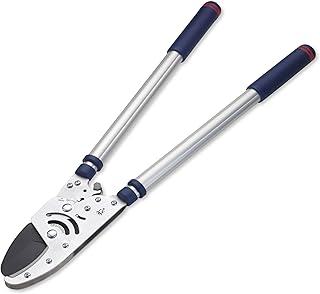
Some loppers use a gear or compound-action mechanism that multiplies your hand force. This can make cutting thicker branches easier, especially for users with less hand strength. The trade-off is that these mechanisms add moving parts that may require occasional maintenance. For heavy-duty pruning, a geared lopper can save significant effort. For light trimming, a simpler design may be more reliable over time.
Blade Quality and Coating
Blades made from hardened steel stay sharp longer and resist chipping. Many loppers have a low-friction coating (like Teflon or titanium) that prevents sap from sticking and makes cuts smoother. While not essential, this coating reduces cleaning time and keeps the blades cutting cleanly. If you prune frequently, a coated blade is worth the extra cost.
Comfort and Ergonomics
Pruning can involve hundreds of cuts in a single session. Look for handles with soft-grip sections that cushion your hands and reduce fatigue. Some loppers also feature shock-absorbing bumpers that soften the jarring stop when the blades meet. A comfortable grip and balanced weight distribution make a big difference over time. If you have arthritis or weak grip, consider a model with a ratcheting or power-gear mechanism.
For more home and garden advice, browse our gardening section.
Why You Should Trust Us
At Picks Worth Buying, our recommendations are based on available product specifications, listed features, real-world usability factors, and documented customer feedback. We compare each lopper’s intended use, cutting capacity, handle design, and overall value to help you find the right match. We do not claim to have conducted independent lab tests, but we carefully evaluate buyer-reported experiences and practical considerations.
Our goal is to save you time and money by highlighting the tools that genuinely perform for the average gardener. Every product in this guide has earned strong ratings and consistent praise for its specific use case.
Final Thoughts
After comparing 10 loppers, three stand out for different reasons. For most gardeners who need a versatile bypass lopper for live branches, the Heavy-Duty Tree Trimmer with Low-Friction Steel offers excellent value and comfort at an affordable price. If you regularly cut thick dead wood, the TABOR TOOLS GG12A Anvil Lopper with Compound Action provides extra leverage and a 2-inch capacity. For those who want maximum cutting power with less effort, the PowerGear Multiplies Leverage to Maximize Power lopper uses a gear mechanism that reduces strain while cutting branches up to 2 inches thick. Choose based on your typical branch size and whether you need to reach high or work in tight spaces.
For more gardening tool recommendations, see our gardening tools page.
Frequently Asked Questions
What is the difference between bypass and anvil loppers?
Bypass loppers cut like scissors, making clean cuts ideal for live wood. Anvil loppers crush the branch against a flat surface, which is better for dead or dry wood.
How thick of a branch can loppers cut?
Most loppers handle branches from 1.25 to 2.5 inches in diameter. Check the product’s cut capacity before buying to ensure it matches your needs.
Are longer handles always better?
Longer handles provide more leverage but add weight and bulk. For ground-level pruning, longer handles help reach farther. For overhead work or tight spaces, shorter handles are easier to control.
Do loppers require maintenance?
Yes. Keep blades clean and dry after each use. Occasionally wipe them with a light oil to prevent rust. Some blades can be sharpened, but many lower-cost models are best replaced when dull.
What does “gear action” mean in loppers?
Gear-action loppers use a mechanism that multiplies the force you apply to the handles, making it easier to cut thicker branches with less hand strength.
Can I use loppers for pruning fruit trees?
Yes, but use bypass loppers for live branches to avoid crushing the bark. Anvil loppers can damage the tree’s cambium layer, leading to disease.
What is the best lopper for someone with weak hands?
Look for loppers with a ratcheting or gear mechanism that reduces the effort needed. Models with padded handles also help reduce hand fatigue.
Are telescopic loppers worth it?
Telescopic handles allow you to extend your reach for high branches without a ladder. They add weight and complexity but can be very useful for tall shrubs or trees.
How do I know which lopper size to buy?
Consider the typical branch diameter and your reach needs. For general yard maintenance, a 28-inch bypass lopper with a 1.5-inch cut capacity is a versatile starting point.
Can I replace the blades on loppers?
Some high-end models allow blade replacement, but many lower-cost loppers are disposable. Check the manufacturer’s product page for replacement parts availability.