Affiliate Disclosure: As an Amazon Associate, we earn from qualifying purchases.
Tip: Check the latest price, product details, and current availability on Amazon or the retailer page before making a final decision.
A cluttered desk can make it harder to focus, and finding the right organizer is often the difference between a productive workspace and a frustrating one. With so many styles, sizes, and features available, choosing the best desk organizers for your needs can feel overwhelming. Some prioritize pen storage, others focus on paper organization, and many combine both with monitor stands or drawers.
This guide is for anyone who wants a more organized desk, whether you work from home full time, manage a busy office, or just want a cleaner study space. We have compared 10 popular options to help you understand the practical differences that matter most, from tier counts to material choices. By the end, you will know exactly what to look for in 2026 and which type of organizer fits your daily routine.



What to Look for in a Desk Organizer
Before you pick a desk organizer, it helps to think about what you actually need to store. Are you mostly dealing with pens and small supplies, or do you have stacks of paper and files? Do you need to free up desk space for a monitor or laptop? Answering these questions will guide you toward the right type.
Here are the key criteria to consider when comparing desk organizers. These factors will help you narrow down the options and choose a model that fits your workflow, your desk size, and your personal preferences.
Size and Footprint
The physical size of the organizer matters more than you might think. A large, multi-tier unit can hold a lot, but it will dominate a small desk. Measure your available desk space before you buy, and consider the depth and height of the organizer in relation to your monitor or other equipment.
If you have a compact desk, a vertical or tiered organizer can maximize storage without taking up too much horizontal space. For larger desks, a wider unit with multiple compartments might be a better fit. Always check the product dimensions and compare them to your own setup.
Storage Capacity and Compartments
Think about what you need to store daily. Pen holders are essential for writing tools, while letter trays or file holders keep papers and documents organized. Some organizers include drawers for small items like sticky notes, clips, or USB drives. Make a list of your most-used desk items and ensure the organizer has a dedicated spot for each.
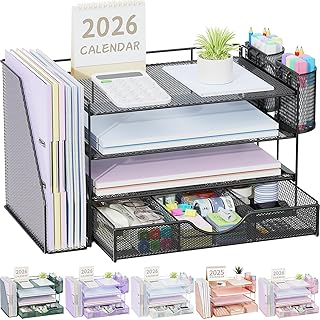
Consider the number of tiers or compartments. A 2-tier organizer might be enough for minimalists, while a 5-tier or 7-tier unit offers more vertical storage for files and supplies. If you have a lot of paper, prioritize models with multiple letter trays or a file holder.
Material and Build Quality
Desk organizers come in a variety of materials, including metal, plastic, and wood. Metal mesh organizers are often more durable and have a professional look, while plastic options are lightweight and budget-friendly. Wood organizers add a warm, natural aesthetic but may be heavier and more expensive.
Consider how much wear and tear the organizer will see. If you frequently move things around or have a busy household, a sturdier material might be worth the investment. For a static desk setup, a lighter plastic option could be perfectly adequate.
Ease of Access
An organizer should make your life easier, not harder. Look for designs that allow you to see and reach your items quickly. Open compartments and angled trays make it easy to grab a pen or file, while drawers and covered sections keep things out of sight but may require an extra step to access.
If you tend to grab things quickly, prioritize an open design. If you prefer a clean, minimalist look, you might prefer an organizer with drawers or closed storage. Think about how you work and what will feel most natural.
Versatility and Multi-Functionality
Many desk organizers serve double duty. For example, a monitor stand with built-in storage can elevate your screen to eye level while providing a place for pens and papers. This is a great way to save space and reduce clutter in one go.
Consider whether you need a dedicated organizer or if a multi-functional piece would better suit your needs. If you use a laptop or monitor, a riser with storage can be a smart investment. If you only need to corral small items, a simple pen cup might be enough.
Portability and Flexibility
If you like to change your setup frequently or work from different locations, portability matters. Lightweight organizers with handles or a compact footprint are easier to move around. Some organizers are modular, allowing you to add or remove sections as your needs change.
Consider how often you rearrange your desk. A heavy, all-in-one unit might be a hassle if you like to switch things up. A lighter, more flexible option could be a better fit for a dynamic workspace.
Why You Should Trust Us
We base our recommendations on a careful analysis of the available product specifications, features, and customer feedback. We compare the practical differences between products, such as size, storage capacity, and material, to help you identify which organizer is best suited for your specific needs. Our goal is to provide clear, unbiased information so you can make an informed purchase decision.
We do not claim to have tested these products ourselves. Instead, we rely on documented buyer feedback and the details provided by the manufacturer to highlight meaningful differences and potential trade-offs. This approach helps us focus on what real users find important, from ease of assembly to daily usability.
Final Thoughts
Choosing the best desk organizer comes down to understanding your own workspace and habits. If you need a versatile, space-saving solution, the OPNICE Desk Organizer and Accessories offers a 2-tier design with a monitor stand, making it a strong all-around choice for those who want to elevate their screen and store supplies. For a more budget-friendly option, the WALI Desk File Organizer provides solid storage with a drawer and pen holders at a practical price point.
If you have a lot of paper to manage, the Simple Trending 7 Tier Desk File Organizer offers ample vertical storage and is well-suited for heavy paper organization. Ultimately, the right organizer is the one that fits your desk, your workflow, and your personal style. Take the time to assess your needs, and you will find a solution that keeps your workspace tidy and functional.
Frequently Asked Questions
What is the best desk organizer for a small desk?
For small desks, look for a compact or vertical organizer that maximizes storage without taking up too much surface area. A monitor stand with built-in storage, like the OPNICE Desk Organizer and Accessories, can be a great space-saving solution. Consider the footprint and height to ensure it fits comfortably.
How do I choose between a desk organizer with a monitor stand and one without?
If you use a monitor or laptop, a riser with storage can help you free up desk space and improve ergonomics. If you already have your screen at the right height, a standalone organizer might be more flexible. Think about your current setup and whether you need extra elevation.
Are metal or plastic desk organizers better?
Metal organizers, especially those with a mesh design, tend to be more durable and have a professional look. Plastic organizers are lightweight and often more affordable. Your choice depends on your budget, aesthetic preference, and how much wear and tear you expect.
Can I use a desk organizer for items other than office supplies?
Yes, many desk organizers are versatile and can be used for craft supplies, makeup, or small electronics. The compartments and tiers can help keep various items sorted and within reach. Just make sure the size and design suit the items you want to store.
How many tiers do I need in a desk organizer?
The number of tiers depends on how much stuff you need to store. If you have a lot of papers and files, a 4-tier or 5-tier organizer might be necessary. For minimalists, a 2-tier or 3-tier unit could be sufficient. Consider your current clutter level and future needs.
What is the best way to clean a desk organizer?
Cleaning methods vary by material. For metal or plastic organizers, a damp cloth with mild soap is usually sufficient. Wood organizers may require special cleaners to avoid damage. Always check the manufacturer’s instructions for specific care recommendations.
Are desk organizers with drawers worth it?
Drawers are useful for hiding small items like sticky notes, clips, or USB drives, which helps reduce visual clutter. They can be especially valuable if you prefer a clean, minimalist desk. However, they add to the overall size and cost, so consider if you need that extra storage.
Can a desk organizer help with productivity?
Yes, a well-organized desk can reduce distractions and make it easier to find what you need, which can improve focus and efficiency. By having a designated place for your supplies, you spend less time searching and more time working. This is one of the main reasons to invest in a good organizer.
What is the best desk organizer for a home office?
For a home office, consider your specific workflow and available space. A monitor stand with storage, like the OPNICE Desk Organizer and Accessories, can be a great choice if you use a desktop computer. If you have a lot of paperwork, a multi-tier file organizer might be more practical. Think about what you need to keep within reach.
Are there desk organizers that can grow with my needs?
Some desk organizers are modular, allowing you to add or remove sections as your storage needs change. This can be a cost-effective solution in the long run. However, modular systems can be more expensive upfront, so weigh the initial investment against future flexibility.