
Affiliate Disclosure: As an Amazon Associate, we earn from qualifying purchases.
Tip: Check the latest price, product details, and current availability on Amazon or the retailer page before making a final decision.
If you grow climbing roses, vining vegetables, or flowering clematis, you already know how quickly plants outgrow a flimsy stake. A good trellis keeps growth organized, improves air circulation, and makes harvesting easier. But with so many heights, materials, and mounting options, picking the right one can feel overwhelming.
In September 2026, we looked at 10 trellises ranging from heavy-duty iron panels to lightweight metal lattice sets. What matters most is matching the trellis to your plant type and space. Below you’ll find a direct comparison of the best trellises available now, plus a buying guide that walks you through the practical factors to consider.


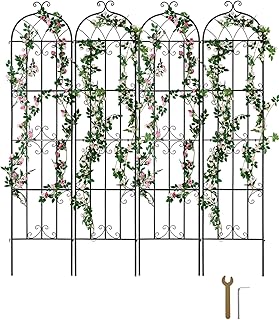


Choosing a trellis comes down to a few straightforward criteria. Here are the most important features to weigh before you buy.
Material and Durability
Metal trellises dominate this category because they offer the best strength-to-weight ratio. Powder‑coated steel or iron resists rust longer than bare metal, especially in rainy climates. Heavier iron panels can support dense growth like grapevines or large climbing roses without bending. Thinner wire lattice works well for lighter plants such as peas or morning glories.
Height and Width
A trellis needs to be tall enough for the plant’s mature height and wide enough to let vines spread naturally. Most vegetable trellises run 70–87 inches tall, which suits cucumbers and pole beans. Shorter panels around 60 inches can work for container gardens or low flower beds. Measure your planting area and account for the trellis’s footprint.
Mounting and Installation
Some trellises come with ground stakes or a base that sits on the ground, making setup a simple push‑in or stake‑down job. Others are wall‑mounted and require drilling into a fence or structure. If you plan to move the trellis between seasons, a freestanding design is more convenient. For permanent garden boundaries, a wall‑mounted model saves floor space.
Weight Capacity and Sturdiness
Heavy‑duty trellises, such as those made from 1‑inch iron frames, can support substantial vine weight without sagging. Lighter wire panels are fine for small flowers but may bow under a heavy cucumber harvest. Check whether the trellis includes stabilizer bars or cross‑bracing for added rigidity.
Rust Resistance and Coating
Outdoor trellises face rain, soil moisture, and sun exposure. A black powder coating is the most common protective finish. Some panels also include a rust‑proofing treatment. If you live in a coastal or humid region, look for explicitly rust‑proof coatings or consider vinyl trellises, which never rust but have a slightly different appearance.
Style and Aesthetic
Trellises serve a functional purpose but also become part of your garden’s look. Arch designs add a decorative element to walkways. Lattice panels offer a clean, uniform grid that suits modern gardens. Rustic iron with scrollwork can complement a more traditional setting. Pick a style that fits the overall garden design, not just the plant’s needs.
Number of Panels (Single vs. Multi‑pack)
Many trellises sell in packs of two, four, or more. If you have a long row of climbing plants, a multi‑pack can cover more ground at a lower per‑panel cost. For a single focal point, an individual panel or a larger standalone trellis may be enough. Consider your planting layout before deciding how many panels you actually need.
Why You Should Trust Us
At Picks Worth Buying, we evaluate products based on their listed specifications, features, and real‑world use cases. We draw on documented buyer feedback to identify recurring strengths and shortcomings. Our goal is to highlight meaningful differences so you can match a trellis to your specific garden situation and budget. We do not claim to have physically tested every item; instead, we compare what manufacturers and verified purchasers report to give you an honest, practical perspective.
Final Thoughts
For gardeners who need a rock‑solid, permanent support for heavy vines, the <a href="60 lb Solid Iron Scrollwork Panel, 1" Metal Frame stands out because of its heavy‑duty iron construction and tall 72‑inch height. If you’re covering a longer bed at a reasonable cost, the VEVOR Garden Trellis for Climbing Plants four‑pack offers good height and rust resistance. For a budget‑friendly starter that still looks clean, the Rustproof, Heavy Duty, Black Coating Gardon two‑pack is a solid value.
Remember that trellis height and sturdiness are the two biggest factors in long‑term satisfaction. A trellis that’s too short for your plant will need replacing next season, while one that’s too flimsy can collapse under heavy growth. Take a quick measurement of your garden bed and think about what you’ll grow before you commit.
If you’re also organizing your garden tools or travel gear, check out our guides on luggage scales or toiletry bags for worry‑free trips.
Frequently Asked Questions
What size trellis do I need for cucumbers?
Cucumbers climb naturally and do well on trellises that are at least 5–6 feet tall. The wider the trellis, the more vines you can support. Look for a sturdy metal trellis with a grid that allows tendrils to grip easily.
Can I use a trellis for potted plants?
Yes. Many trellises are designed with pointed ends or a narrow base that fits into large pots. Make sure the pot is heavy enough to keep the trellis upright when the plant is fully grown.
How do I install a wall‑mounted trellis?
Wall‑mounted trellises usually require drilling and using wall anchors. Mark the attachment points, drill pilot holes, insert anchors, and then screw the brackets into place. Some models come with a mounting kit included.
What’s the best trellis for heavy vines like grapes?
Heavy‑duty iron or steel trellises with a 1‑inch frame are best for plants like grapes, which can become quite heavy. Look for a trellis that includes stabilizer bars or a wide base for extra support.
Do trellises rust over time?
Powder‑coated metal trellises are resistant to rust, but prolonged exposure to moisture can still cause corrosion over many years. Choose a trellis with a rust‑proof coating, especially if you live in a humid or coastal area. Vinyl trellises are completely rust‑resistant.
How do I clean a trellis?
Most metal trellises can be wiped down with a damp cloth or hosed off. For stubborn dirt or mildew, use a mild soap solution and a soft brush. Rinse thoroughly and allow to air dry.
Can I leave a trellis outside in winter?
Yes, most metal trellises are designed to stay outdoors year‑round. However, if the trellis is lightweight and you live in an area with heavy snow or strong winds, it’s a good idea to bring it indoors or secure it firmly to prevent damage.
What is the difference between a trellis and a plant cage?
A trellis is a flat or arched structure that climbing plants attach to, while a plant cage is a cylindrical or dome‑shaped support that encloses the plant. Trellises are better for vining plants; cages are better for bushy plants like tomatoes.
How many trellis panels do I need for a 10‑foot row of beans?
If each panel is about 20 inches wide, you will need roughly six panels to cover a 10‑foot row. Multi‑packs are the most economical way to buy several panels at once.
Are there trellises that fold for storage?
Some trellises feature a foldable or collapsible design, especially those made from wire lattice. These are convenient for seasonal gardens or small spaces where storage is tight.