Affiliate Disclosure: As an Amazon Associate, we earn from qualifying purchases.
Tip: Check the latest price, product details, and current availability on Amazon or the retailer page before making a final decision.
If you’re looking to start a garden without the hassle of tilling soil or bending over constantly, a wooden raised garden bed is a smart investment. But with so many sizes, heights, and wood types available, it’s easy to feel overwhelmed. This guide covers 10 wooden raised garden beds for 2026 — from elevated models with wheels to extra-deep planters — so you can find one that fits your space and growing needs.
Whether you have a small patio, a large backyard, or limited mobility, the right raised bed makes gardening more comfortable and productive. We’ve compared the key features, dimensions, and user feedback to help you decide. For more gardening essentials, check out our Raised Garden Beds category page.

Pros
- Easy assembly with interlocking panels
- Spacious 8-foot growing area
- Natural wood finish blends with yard
- Includes liner and divider for organization
- Affordable option for beginners
Cons
- Wood may feel less sturdy than thicker options
- Some units may have cracked joiners
- Requires treatment for long-term durability

Pros
- Reduces bending and kneeling
- Includes protective bed liner
- Weather-resistant wood construction
- Spacious planting area
- Easy to assemble

Pros
- Spacious 46-inch planting area
- Durable fir wood construction
- Single-piece side boards reduce leakage
- Bottom drainage prevents water buildup
- Easy to assemble from reviews
Cons
- Bottom board gaps may allow soil seepage

Pros
- Sturdy fir wood build
- High soil capacity per bed
- Two beds included
- Weather resistant
- Simple assembly
Cons
- Unfinished wood may need sealing

Pros
- Strong 331 lb soil capacity
- No bending needed at 31 inches tall
- Fir wood resists warping and splitting
- Quick assembly in under 40 minutes
- Includes waterproof liner for wood protection
Cons
- Untreated wood may need sealing for longevity
- Waterproof liner requires DIY drainage holes
- Assembly easier with two people

Pros
- Comfortable working height
- Ample planting space
- Weather-resistant fir wood
- Built-in drainage holes
- Included liner protects wood
Cons
- Some users report wood splitting over time
- Liner may degrade in sunlight
- Assembly requires a rubber mallet

Pros
- Ergonomic height reduces back and knee strain
- Included bed liner protects wood and blocks weeds
- Proper drainage prevents waterlogging
- Compact footprint fits small spaces
- Durable wood resists warping
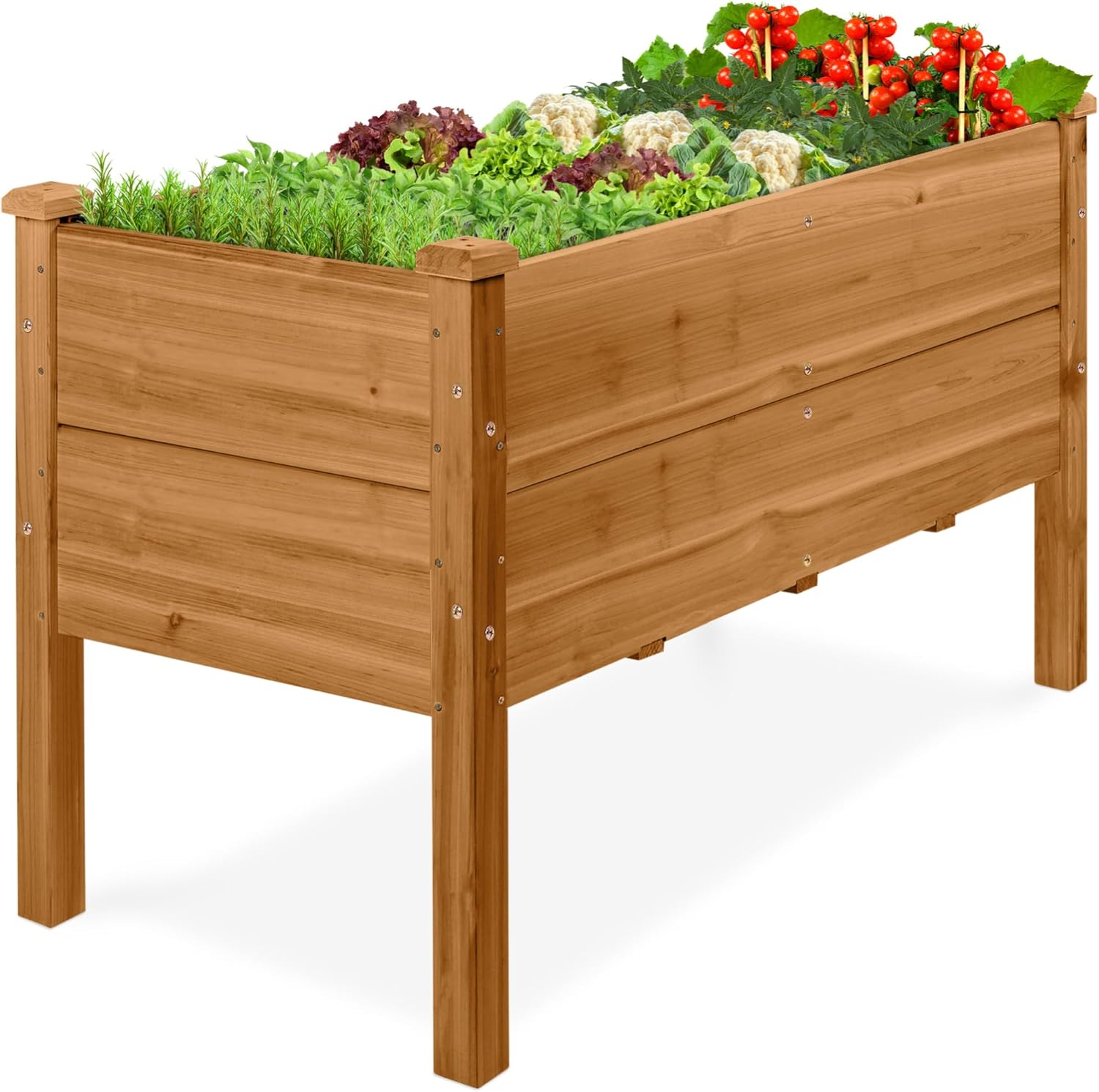
Pros
- Deep 16-inch soil depth
- Elevated for comfortable gardening
- Built-in drainage holes
- Sturdy fir wood construction
- Compact footprint for small spaces
Cons
- Assembly required

Pros
- Wheeled mobility with locking casters
- Waist-high design saves your back
- Includes weed-blocking liner
- Storage shelf for tools
- Four drainage holes prevent soggy soil

Pros
- Spacious 8-foot planting area
- Includes fabric liner and divider
- Easy slide-together assembly
- Proper drainage system
- Rot and insect resistant
Cons
- Unfinished wood may require sealing
Size and Depth: Match Your Plants
The length and width determine how much you can grow, but depth matters even more. Root vegetables like carrots and potatoes need at least 12 inches of soil, while shallow herbs can do with 8 inches. Many raised beds offer a standard depth of 12 inches, but some models go up to 16 inches for deeper root systems. Consider what you plan to plant before choosing.
Elevated vs. Ground Level
Elevated beds (with legs) are easier on your back and knees because they bring the soil to a comfortable height — usually around 30 inches. They also tend to have a closed bottom, which keeps soil contained and prevents weeds from creeping in. Ground-level beds are better for large-scale gardening and can be placed directly on grass or soil, but require more bending.
Weight Capacity and Durability
Wooden raised beds need to support heavy, wet soil — often hundreds of pounds. Models with reinforced beams, thicker wood, or a stated weight capacity (like 150 or 200 pounds) are built to last. Fir and cedar are common woods; fir is sturdy but may require a liner to prevent rot over time.
Mobility: Wheels and Portability
If you want to move your garden beds to follow the sun or protect them from frost, look for models with lockable wheels. Some elevated beds come with wheels built in, allowing you to reposition them easily. Ground-level beds are more permanent once assembled.
Assembly and Included Accessories
Most wooden raised beds require some assembly. Look for pre-drilled holes, included hardware, and clear instructions. Some models also come with a bed liner to protect the wood and keep soil in place. A storage shelf underneath can be handy for tools or pots.
Drainage and Liner
Proper drainage is critical to prevent root rot. Many raised beds have a closed bottom with pre-drilled drainage holes. If the bed sits directly on the ground, you may need to add a weed barrier. A non-woven fabric liner is common in higher-end models and helps retain moisture while allowing excess water to escape.
Style and Aesthetics
Wooden raised beds come in natural, acorn brown, or painted finishes. If your garden is visible from the house, you might prefer a color that blends with your outdoor decor. The wood type also affects appearance — fir has a lighter, clean look, while cedar develops a silvery patina over time.
For more guidance on choosing garden beds, visit our Garden category for additional tips and product recommendations.
Why You Should Trust Us
We evaluated these wooden raised garden beds by comparing their listed dimensions, materials, weight capacities, and customer feedback. Our goal is to highlight practical differences that matter to real gardeners — not to claim hands-on testing of each model. We rely on verified specifications and common buyer concerns to help you make an informed choice.
Each product listed includes key details like depth, height, and included liners, so you can quickly see which option fits your space and planting plans. We prioritize products that offer clear assembly instructions, solid construction, and features that improve usability.
Final Thoughts
For most home gardeners, the Best Choice Products Raised Garden Bed stands out as a versatile choice. It offers a mobile elevated design with lockable wheels, a storage shelf, and a protective liner — all at a practical price point. With strong customer feedback, it’s a solid all-around option for patios, balconies, or small yards.
If you need a larger growing area, the Best Choice Products 8x2ft Outdoor Wooden Raised provides a ground-level option for serious vegetable gardening. Its long, narrow shape fits along fences or pathways. For those with limited space or mobility concerns, the Best Choice Products 34x18x30in Raised Garden Bed offers a kid-friendly or compact elevated bed with a 150-pound capacity.
Remember to measure your available space and consider the depth your plants need before buying. For more gift ideas for gardeners, see our Best Stocking Stuffers for Men guide.
Frequently Asked Questions
What size wooden raised garden bed should I buy?
Consider the space you have and what you want to grow. A 4×2 foot bed is standard for herbs and flowers, while 8×2 foot beds provide room for vegetables. Depth of at least 12 inches is recommended for most crops.
Do wooden raised beds need a liner?
A liner helps protect the wood from moisture and keeps soil contained. Many raised beds include a liner, but if not, you can add a landscape fabric or plastic sheet with drainage holes.
How long do wooden raised garden beds last?
With proper care, fir or cedar beds can last 3 to 5 years. Using a liner, sealing the wood, and storing them indoors during winter can extend their lifespan.
Can I put a wooden raised bed directly on grass?
Yes, but it’s best to remove the grass first and place a weed barrier underneath. Some raised beds have a closed bottom, which eliminates the need for ground prep.
Are elevated wooden beds better for accessibility?
Elevated beds reduce bending and are ideal for older gardeners or those with back pain. Look for heights around 30 inches for comfortable standing access.
What is the best wood for raised garden beds?
Cedar is naturally rot-resistant, but fir is also common and more affordable. Avoid treated lumber that may contain chemicals unsafe for edible plants.
Can I use a wooden raised bed for flowers?
Absolutely. Many wooden raised beds are designed for vegetables, flowers, and herbs. The depth requirements are similar for most flowering plants.
How much soil do I need for a raised bed?
Calculate the volume using length × width × depth. For a 4×2 foot bed that is 12 inches deep, you’ll need about 8 cubic feet of soil.
Are wooden raised garden beds easy to assemble?
Most models come with pre-drilled holes and hardware for quick assembly. Some can be put together in under an hour with a basic drill.
What is the best wooden raised garden bed for a small patio?
Compact elevated beds with wheels, like the Best Choice Products Raised Garden Bed (48x24x32 inches), are ideal for small patios. They are mobile and can be moved to catch sunlight.
For more inspiration, browse our Raised Garden Beds collection.
Buying Guide
Before choosing a product, compare the core features, comfort level, size, controls, warranty, and current retailer information. Product details can change, so always confirm the latest specifications on the retailer page before buying.
Key Features to Compare
- Massage type, intensity levels, and heat settings.
- Product size, fit, storage, and ease of use.
- Noise level, cleaning needs, and everyday convenience.
- Return policy, warranty, and current availability.