
Affiliate Disclosure: As an Amazon Associate, we earn from qualifying purchases.
Tip: Check the latest price, product details, and current availability on Amazon or the retailer page before making a final decision.
Traveling with multiple devices often means juggling different plug shapes, charging speeds, and voltage requirements. A good travel adapter should simplify that process, not add another layer of confusion. Whether you are heading to Europe, Asia, or the UK, the right adapter keeps your phone, laptop, and camera powered without hunting for a wall socket that fits.
With so many universal options available, it is easy to get lost in specs like GaN, USB-C PD, and plug types. This guide for September 2026 breaks down the practical differences that matter, from charging speed to portability, so you can pick a travel adapter that fits how you actually travel.

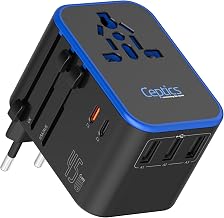


What to Look For in a Travel Adapter
Not all travel adapters are created equal. The right one for you depends on where you are going, what you are charging, and how many devices you carry. Here are the key factors to weigh before you buy.
Plug Type Compatibility
The most basic job of a travel adapter is to fit the local outlet. Different regions use different plug shapes, so a universal adapter with multiple plug types is often the most flexible choice. Look for adapters that cover the regions you plan to visit, whether that is the two-pin Type C used across most of Europe, the three-pin Type G common in the UK, or the flat two-pin Type A used in the US and Japan.
Some adapters include a sliding mechanism or interchangeable prongs, which can save space in your bag. However, a simpler design with a single plug type may be lighter and more reliable if you only travel to one destination. Consider whether you need a global solution or a region-specific adapter.
Charging Speed and Power Delivery
If you are charging a modern smartphone or laptop, charging speed matters. Look for adapters that support USB-C Power Delivery (PD) or Quick Charge (QC) protocols, which can significantly reduce charging time compared to standard USB-A ports. The total wattage output is also important, especially if you plan to charge a laptop, as these devices require more power than a phone.
Adapters with GaN (gallium nitride) technology are often more compact and efficient at converting power, which means less heat and a smaller footprint. However, a higher wattage adapter is usually larger and heavier, so balance power needs with portability. If you only charge a phone and earbuds, a lower wattage adapter may be perfectly sufficient.
Number and Type of Ports
Consider how many devices you typically charge at once. A travel adapter with multiple USB-C and USB-A ports allows you to charge a phone, smartwatch, and camera simultaneously without needing extra chargers. Some adapters also include a traditional AC outlet, which is useful for devices that only have a wall plug, like a camera battery charger.
Keep in mind that the total output is shared among all ports, so charging multiple high-power devices at once may slow down the charging speed. If you travel with a laptop and a phone, look for an adapter with at least one high-wattage USB-C PD port. For lighter packing, a simple adapter with one or two USB ports might be enough.
Voltage Compatibility and Converters
Most modern travel adapters are designed to work with dual voltage devices, meaning they can handle both 110V and 220V power systems. However, some adapters are not voltage converters, so they will not step down the voltage for devices that are not dual voltage. If you plan to use a hair dryer, straightener, or other high-wattage appliance, you may need a separate voltage converter.
Always check the voltage rating on your device before plugging it in. Many laptop and phone chargers are dual voltage, but some older or high-power appliances are not. If you are unsure, it is safer to leave the appliance at home or use a dedicated converter.
Build Quality and Safety
A travel adapter goes through a lot of wear and tear, so build quality matters. Look for adapters with sturdy prongs, a solid connection, and heat-resistant materials. Some adapters include built-in safety features like surge protection or thermal cutoffs, which can protect your devices from power spikes.
While you do not need to spend a fortune, a very cheap adapter may not last long or provide a secure fit. Reading user reviews can give you a sense of how well an adapter holds up over time. A well-built adapter is an investment in your devices’ safety and your peace of mind.
Portability and Design
Travel adapters are meant to be portable, so size and weight are important. A compact adapter is easier to slip into a pocket or small pouch, but it may have fewer ports or a lower wattage output. Some adapters have a foldable plug design, which can make them even more travel-friendly.
Think about where you will store the adapter when not in use. A bulky adapter with a long cord can be annoying to pack. If you are a minimalist traveler, a simple and small adapter may be more appealing, while digital nomads might prefer a larger one with more charging capabilities.
How We Choose These Travel Adapters
We selected these travel adapters based on the available specifications, features, and documented buyer feedback. We focused on practical differences like plug compatibility, charging speed, port options, and build quality. We also considered the needs of different types of travelers, from occasional vacationers to frequent flyers.
We did not physically test these products, but we analyzed the information provided and looked for patterns in user reviews to identify common strengths and weaknesses. Our goal is to help you find a travel adapter that meets your specific needs without overpaying for features you do not need.
Why You Should Trust Us
We compare the available specifications, features, use cases, and documented buyer feedback to identify meaningful differences between products. Our recommendations are based on practical shopping considerations, not on hype or unverified claims. We aim to be transparent about what we know and what we do not.
We do not claim to have tested every product, but we use the data at hand to make informed comparisons. We prioritize clarity and usefulness, so you can make a confident purchase decision. If a product has limitations, we point them out.
Final Thoughts
For most travelers, a universal travel adapter with multiple plug types and a few USB ports offers the best balance of convenience and value. The UK/EU/US/AU/JP Compatible Travel Essential stands out as a strong all-around option, thanks to its broad compatibility and multiple charging ports. It is a solid choice for anyone who wants a single adapter that works in many countries.
If you are on a budget and only need to charge a phone or two, the Travel Plug Adapter for EU/US/UK/AUS offers a more affordable way to stay powered. It covers the most common plug types and includes a few USB ports, making it a practical choice for light travelers. For those who need to charge a laptop on the go, the Anker Nano Smart Power Allocation provides higher wattage and faster charging speeds, though it may be larger and more expensive.
Ultimately, the best travel adapter is the one that fits your specific travel style and device needs. Consider the factors outlined in this guide, and you will be well on your way to finding a reliable travel companion.
Frequently Asked Questions
What is the difference between a travel adapter and a voltage converter?
A travel adapter only changes the physical shape of the plug so it fits into a foreign outlet. A voltage converter changes the electrical voltage to match your device’s requirements. Most modern electronics like phones and laptops are dual voltage, so they only need an adapter. High-wattage appliances like hair dryers may need a converter.
Can I use my hair dryer or straightener with a travel adapter?
It depends on the voltage rating of your appliance. If your hair dryer is not dual voltage, you will need a voltage converter, which is different from a travel adapter. Check the label on your appliance for voltage information. Many travel adapters are not designed to handle the high wattage of hair dryers.
How do I know which plug type I need for my destination?
Different countries use different plug types. For example, most of Europe uses Type C, the UK uses Type G, and the US uses Type A. A universal travel adapter with multiple plug types is the safest bet if you are traveling to multiple countries. You can also look up the specific plug type for your destination online.
What is GaN and why does it matter in a travel adapter?
GaN, or gallium nitride, is a semiconductor material that allows chargers to be more efficient and generate less heat. This means GaN travel adapters can be smaller and lighter than traditional chargers while still delivering high power output. If you are looking for a compact adapter that can charge a laptop, GaN is a good feature to look for.
Can I charge my laptop with a travel adapter?
Yes, but you need to make sure the adapter has enough wattage and a compatible USB-C PD port. Laptops require more power than phones, so look for an adapter with at least 45W or higher output. Some travel adapters are specifically designed for laptop charging, while others are better suited for smaller devices.
How many devices can I charge at once with a travel adapter?
It depends on the number of ports and the total power output. A travel adapter with multiple USB-C and USB-A ports can charge several devices at once, but the charging speed may be slower if you are using all ports simultaneously. Check the adapter’s specifications to see how the power is distributed among the ports.
Are travel adapters safe to use with all my electronics?
Most travel adapters are safe to use with dual voltage devices. However, they do not regulate voltage, so they are not suitable for all appliances. Always check the voltage rating of your device before plugging it in. If you are unsure, consult the device’s manual or contact the manufacturer.
What should I do if my travel adapter gets hot?
Some heat is normal, especially when charging multiple devices at high speed. However, if the adapter becomes excessively hot to the touch, unplug it immediately and stop using it. This could be a sign of a defect or overload. Look for adapters with built-in safety features like thermal protection.
Can I use a travel adapter on a plane?
Travel adapters are designed for use with wall outlets, not airplane power ports. Airplanes typically have their own power outlets, which may require a special adapter or have different voltage requirements. Check with your airline for specific information about in-flight power availability.