Affiliate Disclosure: As an Amazon Associate, we earn from qualifying purchases.
Tip: Check the latest price, product details, and current availability on Amazon or the retailer page before making a final decision.
If you are ready to extend your growing season, protect tender plants from frost, or start seeds weeks earlier, a greenhouse kit is one of the most practical upgrades you can make. But with sizes ranging from compact walk-in tunnels to large cedar structures that cost thousands, choosing the right one is not straightforward.
We looked at 10 greenhouse kits available in September 2026 to understand what actually matters: frame durability, covering material, ventilation, ease of assembly, and how well each fits real-world gardens. Whether you have a small patio or a large backyard, this guide will help you match the kit to your space and goals. If you are also planning raised beds, check out our Raised Garden Beds category for complementary ideas.

Pros
- Cedar wood resists rot and decay
- Polycarbonate panels improve heat retention
- Temperature-activated exhaust fan included
- Built-in shelves and plant hooks
- PowerPort for electrical accessories
Cons
- Stain saturation may vary
- Power source not included
- Requires proper anchoring for wind rating

Pros
- Heavy-duty aluminum frame
- UV-resistant polycarbonate panels
- Easy assembly with labeled parts
- Adjustable roof vents for ventilation
- Spacious 8x10 ft interior
Cons
- Silicone for sealing gaps not included
- Assembly requires two people

Pros
- Easy tool-free assembly
- Withstands winds up to 45 mph
- Sturdy frame with 22 lb shelf capacity
- Generous space for 24 pots
- Portable and easy to relocate
Cons
- Zipper may be less durable
- Needs anchoring in windy areas
- Side window Velcro doesn't seal completely


Pros
- Sturdy aluminum frame
- Spacious 10x18 ft interior
- Adjustable roof vent for airflow
- Polycarbonate panels diffuse light
- Walk-in height accommodates tall users
Cons
- Assembly instructions can be unclear
- Some panels may require forceful fitting
- Quality control issues like misaligned holes


Pros
- Faster assembly with slide-in panels
- Durable polycarbonate and aluminum build
- Integrated rainwater collection system
- Adjustable ventilation for plant health
- Lockable door for added security
Cons
- Instructions may be confusing
- Some reports of missing screws
- Assembly can take several hours
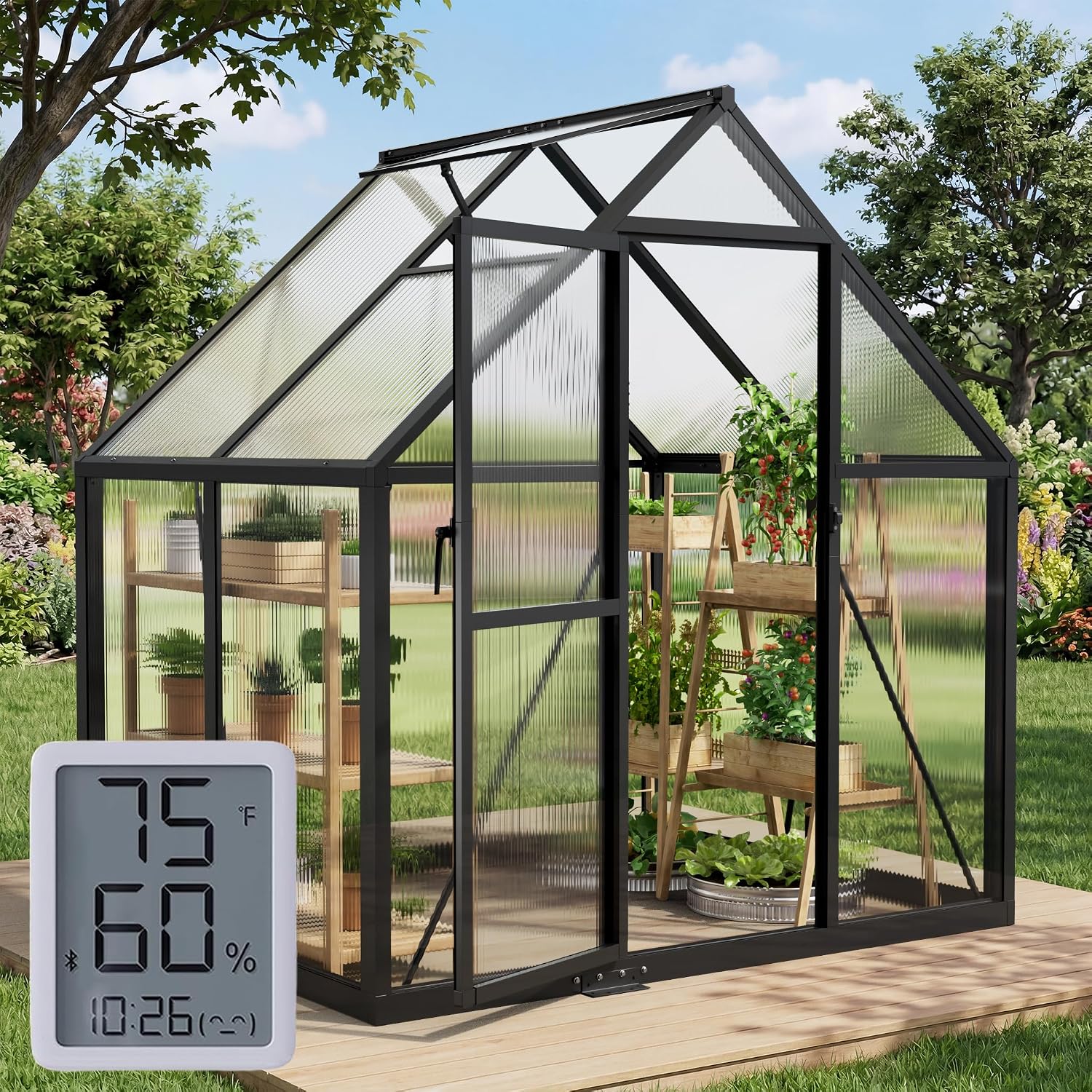

Pros
- Easy to assemble with included tools
- UV-resistant panels for plant health
- Sturdy aluminum frame for durability
- Adjustable roof vent for ventilation
- Spacious interior for multiple plants
Cons
- Silicone sealant not included for gaps
- Only one roof vent for airflow
- Assembly requires two people

Pros
- Weather-resistant overhang design
- Integrated watering system with brass faucet
- USB and USB-C charging ports
- Even air circulation with four fans
- Extra-tall 8-foot peak height
Before you decide on a kit, consider these factors. They will save you from buying something too small, too fragile, or too complicated to assemble.
Size and Footprint
Greenhouse kits range from compact 6×4 foot models to large 13×11 foot walk-in structures. Measure your available space carefully and account for clearance around the greenhouse for access and airflow. A bigger greenhouse gives you more growing room but also costs more to heat and requires more upkeep. Smaller kits like the 6×4 foot aluminum polycarbonate model are ideal for patios or small gardens, while the 13×11 foot cedar option suits serious gardeners.
Frame Material
Frames are typically made from cedar, aluminum, or galvanized steel. Cedar wood looks natural and insulates well but needs occasional sealing. Aluminum is lightweight, rust-resistant, and long-lasting, making it a popular choice for polycarbonate greenhouses. Galvanized steel frames, often used in portable hoop houses, are sturdy and budget-friendly but can rust if the coating scratches. Your climate and aesthetic preference will guide you.
Covering Material
Most kits use either polycarbonate panels or PE (polyethylene) covers. Polycarbonate is rigid, shatter-resistant, and provides good insulation with light diffusion. It lasts many years and withstands hail better than glass or plastic film. PE covers are affordable and light but degrade in sun within a couple of years. If you plan to keep the greenhouse up year-round, polycarbonate is the stronger investment.
Ventilation and Temperature Control
Proper airflow keeps plants healthy and prevents overheating. Look for models with roof vents, side windows, or exhaust fans. Kits with adjustable roof vents and built-in fans make it easier to manage temperature swings. Some large greenhouses even include hygrometers and power strips for running fans or lights. Without good ventilation, temperatures can spike dangerously on sunny days.
Assembly Difficulty
Greenhouse assembly varies from quick-setup pop-up tunnels to multi-hour builds requiring two people. Kits with aluminum frames and snap-together panels tend to be easier than those requiring drilling or cutting. If you are not handy, look for models with clear instructions and labeled parts. Some larger cedar kits may take a full weekend to assemble.
Durability and Weather Resistance
Consider your local weather. Polycarbonate panels with aluminum frames handle wind and snow better than thin PE covers on lightweight frames. Kits with windproof claims and reinforced frames are worth the extra cost in exposed locations. Also check if the kit includes anchoring hardware — many do not, and you will need to secure the greenhouse to the ground separately.
Extra Features
Some greenhouses come with built-in shelving, faucet kits, power ports, or hose hookups. These add convenience but also raise the price. If you plan to spend a lot of time inside, features like a lockable door, gutters, and USB charging ports can make the space feel more like a functional outdoor room. Think about how you will use the greenhouse daily.
Why You Should Trust Us
We compare greenhouse kits based on available specifications, features, use cases, and documented customer feedback to identify meaningful differences between products. We do not claim to have tested every kit ourselves. Instead, we analyze material quality, assembly requirements, size options, and real-world buyer experiences to help you make a practical decision. Our editorial team focuses on what actually matters for home gardeners rather than generic product descriptions.
Final Thoughts
If you want a premium, long-term greenhouse and have the space and budget, the Backyard Discovery Bellerose XL 13′ x 11′ Cedar offers a beautiful wood frame with polycarbonate panels, exhaust fan, hose hookups, and a pergola. It is the largest and most feature-rich kit we considered, ideal for serious gardeners who want a permanent structure.
For a solid all-around option at a more accessible price, the 8′ Extra-Tall Heavy Duty Cedar Wood Greenhouse combines cedar construction with built-in shelving, a faucet kit, and a USB charging power strip. It is tall enough to work in comfortably and fits a moderate backyard.
If you need a large walk-in greenhouse on a tighter budget, the Upgraded Zipper Galvanized Metal Frame Mesh Door tunnel-style kit from KING BIRD covers a 20×10 foot area for a fraction of the cost of rigid kits. It uses a heavy-duty PE cover and is quick to set up, though it will not last as long as polycarbonate models. It is a practical starting point for seasonal growing.
For more garden inspiration, visit our Garden category.
Frequently Asked Questions
What size greenhouse kit do I need for a small backyard?
A 6×4 foot or 6×8 foot kit is usually enough for a small patio or backyard. The 6×4 foot heavy duty aluminum frame polycarbonate model or the 6×8 foot quick-setup PE greenhouse are both compact options.
How long does it take to assemble a greenhouse kit?
Assembly time ranges from under an hour for simple tunnel hoops to a full weekend for large cedar or aluminum structures. Most polycarbonate kits take 2 to 4 hours with two people.
Do I need a permit to install a greenhouse?
Many local building codes require permits for permanent structures over a certain size, especially those anchored to the ground. Always check with your municipality before purchasing.
Can I use a greenhouse kit in winter?
Yes, but you may need to add insulation or a heater for very cold climates. Polycarbonate panels retain heat better than PE covers. Double-wall polycarbonate kits are best for winter use.
Which covering lasts longer: polycarbonate or PE?
Polycarbonate panels typically last 10 to 15 years or more, while PE covers need replacement every 2 to 4 years depending on sun exposure. Polycarbonate is the more durable choice.
Do greenhouse kits come with flooring?
Most kits do not include a floor. You will need to prepare a level base using gravel, pavers, or a concrete slab. Some larger kits include ground stakes or anchor kits.
Are aluminum frame greenhouses better than wood?
Aluminum frames are lightweight, rust-proof, and require little maintenance. Wood frames offer better insulation and a natural look but need periodic sealing. Choose based on your climate and aesthetic preference.
How much do greenhouse kits cost?
Prices vary widely. Basic PE tunnel kits start around $74.99, while large polycarbonate or cedar models go up to $5,799.00. Most mid-range kits fall between $200 and $1,200.
What is the best greenhouse kit for beginners?
A small to mid-size polycarbonate kit with an aluminum frame is a great start because it requires less maintenance and assembles relatively easily. The 6×8 foot heavy duty aluminum frame model is a popular entry choice.
Can I grow vegetables year-round in a greenhouse?
In most climates, you can grow cool-season vegetables like lettuce and kale through winter with minimal heat. With supplemental lighting and heating, warm-season crops like tomatoes can be grown year-round in well-insulated greenhouses.
Buying Guide
Before choosing a product, compare the core features, comfort level, size, controls, warranty, and current retailer information. Product details can change, so always confirm the latest specifications on the retailer page before buying.
Key Features to Compare
- Massage type, intensity levels, and heat settings.
- Product size, fit, storage, and ease of use.
- Noise level, cleaning needs, and everyday convenience.
- Return policy, warranty, and current availability.