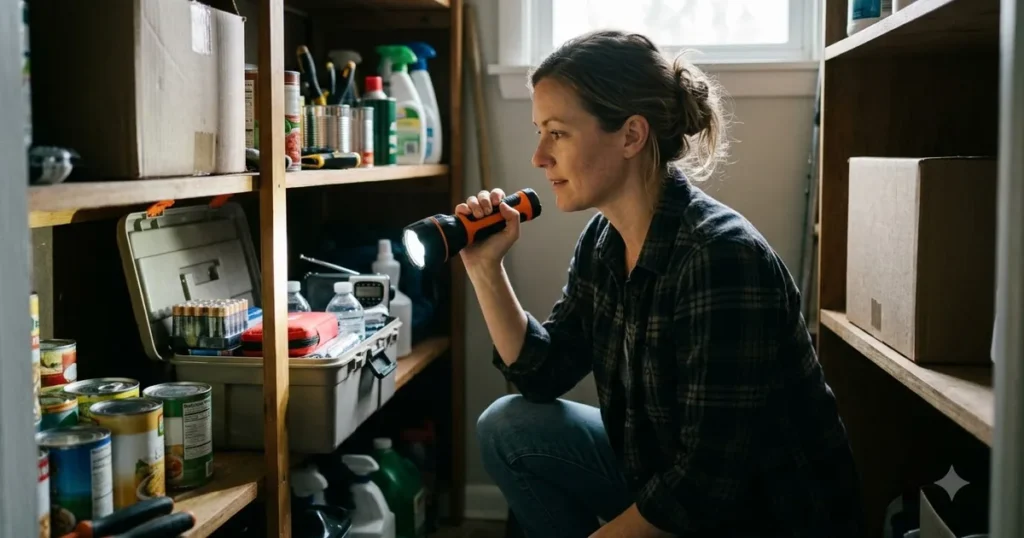
Power outages can happen anytime, often without warning. Whether it is a winter storm, a hurricane, or a grid failure, having a dependable light source in your emergency kit is not optional. But choosing the right flashlight for a power outage kit can be trickier than it seems. You need something that is bright enough to light up a room, durable enough to survive being dropped in a dark basement, and portable enough to grab quickly. You also need to think about how it gets power and how long it lasts. This guide covers the practical differences that matter when you are building or updating your emergency supplies for 2026.
We looked at the available options for the November season and focused on one product that stands out for its versatility and value. The Emergency Winter category is full of gear that promises a lot, but we prioritize real-world usefulness. Here is what you need to know before you buy.

Pros
- Compact and lightweight when collapsed
- Solar and USB charging options
- Water and impact resistant
- Long battery life per charge
- Versatile as lantern or flashlight
When you are choosing a flashlight for your power outage kit, the specifications on the box only tell part of the story. The real question is how the light performs when you actually need it. Here are the criteria that matter most for emergency use.
Light Output and Coverage
A standard flashlight throws a narrow beam, which is great for walking or searching, but not ideal for lighting up a room during an outage. For emergency kits, consider lights that offer 360-degree coverage. This turns the flashlight into a lantern that can illuminate an entire room, making it easier to move around, find supplies, or keep the family calm. The trade-off is that lantern-style lights are often bulkier than a simple penlight, but for a home kit, the versatility is worth it.
Power Source and Recharging
Batteries are the weak link in any emergency light. Disposable batteries can leak or lose charge over time. Rechargeable lights with USB charging are convenient, but they require access to a powered USB port. That is why solar charging is a smart feature for an emergency kit. A light that can recharge from the sun during the day gives you a renewable power source when the grid is down. Some lights also include automatic power-off protection to prevent overcharging, which adds peace of mind.
Portability and Storage
Emergency kits are often packed into a single bin or backpack. Space is at a premium. A collapsible design that folds down to the size of a phone makes it easy to store multiple units without sacrificing space. A built-in handle or hook is also useful, because it allows you to hang the light from a tent pole, a doorknob, or a tree branch, freeing your hands for other tasks.
Durability and Weather Resistance
Power outages often happen during extreme weather. Your flashlight might be exposed to rain, snow, humidity, or freezing temperatures. A light made from high-quality ABS plastic with water-resistant construction can handle these conditions without failing. Heat resistance and freeze resistance are also important if the kit is stored in a garage or shed where temperatures fluctuate.
Battery Life and Runtime
An outage can last hours or days. A flashlight that runs out of power after a few hours is not very useful. Look for lights that offer at least 20 to 25 hours of runtime on a full charge. This ensures you have light through the night and into the next day without needing to recharge immediately. Keep in mind that higher brightness settings drain the battery faster, so a light with adjustable brightness can help extend runtime.
Ease of Use for All Family Members
During a stressful situation, complicated controls are frustrating. A flashlight that is simple to operate, even for children or elderly family members, is a practical choice. Lights with a single switch or a simple pull-up mechanism are easier to use in the dark than those with multi-button interfaces. Lightweight designs are also better for younger users who might need to carry their own light.
Value and Kit Suitability
For an emergency kit, buying a single high-end flashlight might not be the best approach. A multi-pack of reliable, affordable lights allows you to place one in the kitchen, one in the bedroom, one in the car, and one in the garage. This way, you are never left fumbling in the dark looking for the only light source. The price per unit becomes less important than the overall coverage and convenience.
Why You Should Trust Us
At Picks Worth Buying, we do not test products in a lab. Instead, we compare the available specifications, features, use cases, and documented buyer feedback to identify meaningful differences between products. For this guide, we focused on the practical needs of someone building or updating a power outage kit. We looked at light output, power options, portability, durability, and overall value. Our recommendations are based on what real shoppers tell us matters most when the lights go out.
Final Thoughts
For most households, the strongest all-around option for a power outage kit is a versatile light that combines flashlight and lantern functions, offers multiple charging methods, and is durable enough to handle tough conditions. The Collapsible Portable LED Camping Lantern XTAUTO fits this description well. Its 360-degree lighting coverage, solar and USB charging, collapsible design, and water-resistant build make it a practical choice for emergency preparedness.
If you are looking for a value-oriented solution, the 4-pack format of this light allows you to distribute units throughout your home, car, and outdoor gear without breaking the bank. This approach ensures that everyone in the family has access to a reliable light source when they need it most.
For more winter preparedness ideas, check out our guide on best oil filled radiators for keeping warm during an outage.
Frequently Asked Questions
What is the best flashlight for a power outage kit?
The best flashlight for a power outage kit is one that offers both flashlight and lantern modes, has a long battery life, and can be recharged via USB or solar. A collapsible design is also helpful for storage.
How many lumens do I need for an emergency flashlight?
For room illumination, a light that provides 100 to 300 lumens is usually sufficient. Higher lumens are better for outdoor use but drain the battery faster.
Should I get a rechargeable or battery-powered flashlight?
Rechargeable lights with USB and solar charging are more convenient for emergency kits because you do not need to buy disposable batteries. However, keep a backup power bank or solar panel handy.
How long should a flashlight last during a power outage?
Look for a flashlight that offers at least 20 to 25 hours of runtime on a full charge. This covers a typical overnight outage and into the next day.
Is a lantern better than a flashlight for power outages?
A lantern provides 360-degree light, which is better for illuminating a room. A flashlight is better for focused tasks like walking or searching. A combination light that does both is ideal.
Can I use a camping lantern for home emergencies?
Yes, many camping lanterns are designed for outdoor use and are durable, water-resistant, and portable. They work well for home emergencies, especially if they have multiple charging options.
How do I store a flashlight in an emergency kit?
Store the flashlight in a dry, accessible location. If it is rechargeable, check the charge level every few months and recharge as needed. Keep it in a protective case or bag to prevent damage.
What features should I look for in a power outage flashlight?
Key features include 360-degree lighting, USB and solar charging, collapsible design, water resistance, long battery life, and a simple on/off mechanism. A handle or hook is also useful.
Are solar flashlights reliable for emergencies?
Solar flashlights are reliable as long as they have a backup charging method, such as USB. They are a great renewable option for extended outages, but they need sunlight to charge.
How many flashlights should I have in my emergency kit?
It is a good idea to have at least one flashlight per person in the household, plus a few extras for different rooms or the car. A multi-pack is a convenient way to cover all bases.
Popular buying guides
Get Black Friday deal alerts
We will email you when prices drop on products we recommend, plus a short checklist for spotting real deals. No spam. Unsubscribe any time.