Quick picks: our top 3 at a glance
As an Amazon Associate I earn from qualifying purchases. Prices and availability change.

When the power goes out during a winter storm, the first thing you want is a reliable backup that keeps your fridge running, your phone charged, and your home essentials powered. But with so many portable power stations on the market, it’s hard to know which one fits your situation. In this guide, we break down 8 models, from compact units for weekend camping to larger stations that can power a mini fridge for days.
We focus on the practical differences that matter: capacity, output, charging speed, and portability. Whether you’re preparing for an emergency or planning a winter road trip, this guide will help you decide what to buy. For more winter preparedness ideas, check out our winter essentials collection.
At a Glance
| Product | Rating | Key feature | Where to buy |
|---|---|---|---|
| Jackery Explorer 300 Portable Power Station,292Wh | 4.6 / 5 | Ultra-Lightweight: At only 7.5 lbs, the Explorer 300 delivers a robust 292Wh capac… | View on Amazon |
| Jackery Explorer 1000 v2 Portable Power Station,1070Wh,1500W | 4.7 / 5 | Powerful yet Compact: Boasting a 1,500W AC output and a 3,000W surge peak, the Sol… | View on Amazon |
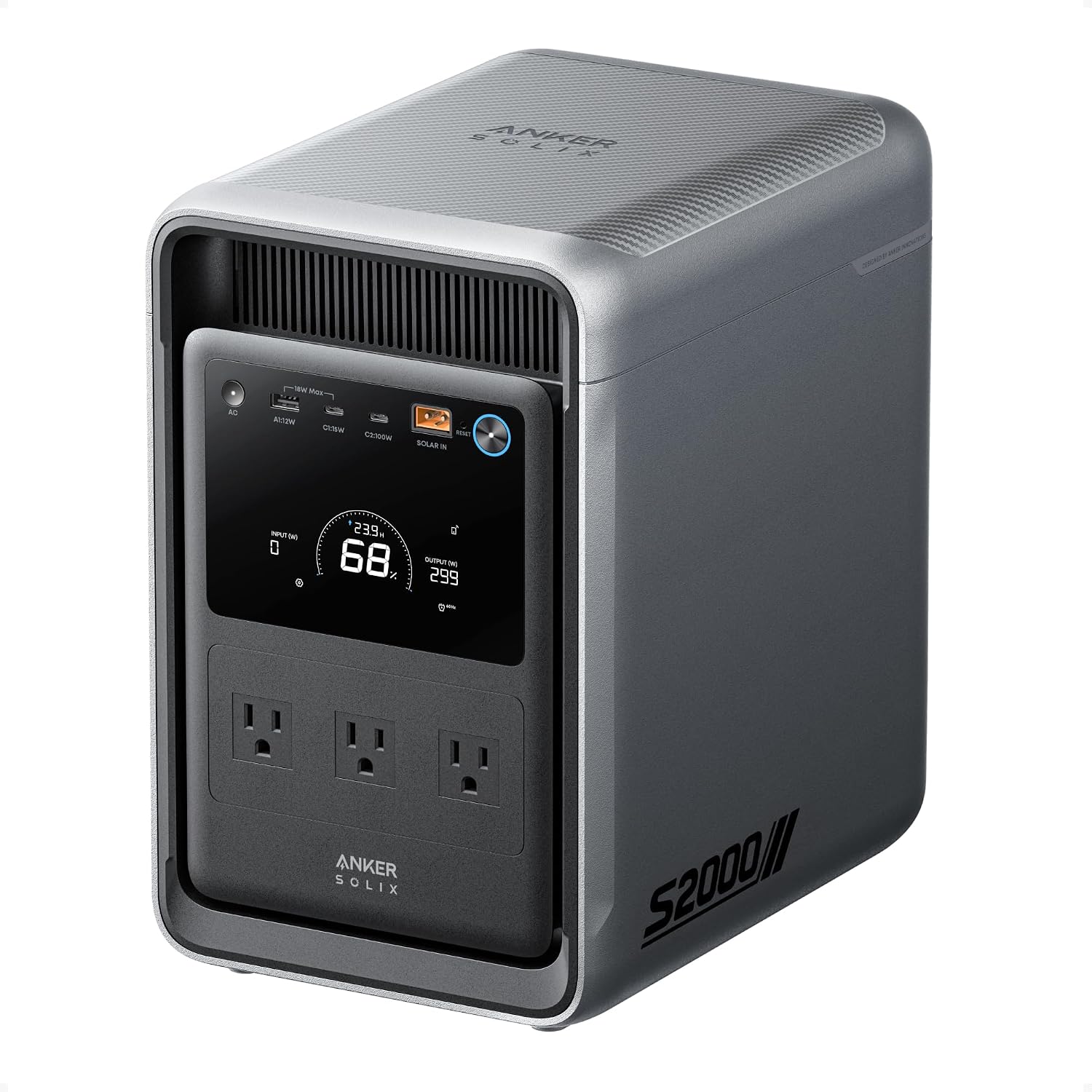
| Anker SOLIX S2000 Portable Power Station, 2,010Wh, 1,500W | 4.7 / 5 | View on Amazon | |
| Anker SOLIX C1000 Gen 2 Portable Power Station | 4.7 / 5 | 49 Min UltraFast Recharging: With upgraded HyperFlash tech, fully recharge at 1,60… | View on Amazon |
| BLUETTI Elite 30 V2 Portable Power Station 288Wh 600W LFP Solar Gen… | 4.4 / 5 | [288Wh On-the-Go Power] – Only 9.4 lbs lightweight, carry it anywhere during storm… | View on Amazon |
Ratings come from the Amazon listings when we last checked and can change.
Pros
- Lightweight at only 7.5 pounds
- Long-lasting LiFePO4 battery with 4,000 cycles
- Fast solar charging capability
- Multiple ports for six devices at once
- Quiet and emission-free operation
Cons
- Solar panel sold separately
- 300W output may not run large appliances
Pros
- Fast 1-hour full recharge via app
- Lightweight and portable at 23.8 lbs
- Long-lasting LFP battery with 4,000 cycles
- Multiple ports including USB-C 100W
- Smart app control for flexible charging
Cons
- Solar panels not included
- Only compatible with Jackery solar panels
- 1-hour charge requires app activation each time
Pros
- Long 35-hour fridge runtime
- Lightweight at 35.7 lbs
- Compact size saves space
- 10,000-cycle LFP battery
- UPS with under 10ms switchover
Cons
- No 12V DC port for car accessories

Pros
- Recharges in under 49 minutes
- 2,000W output for multiple devices
- 4,000-cycle battery lifespan
- Compact and lightweight design
- Solar charging for off-grid use

Pros
- Lightweight and portable at 9.5 lbs
- Fast AC recharge in about 70 minutes
- 1500W surge mode for small appliances
- Multiple charging options including solar
- Ultra-fast UPS backup under 10ms
Cons
- 288Wh capacity limited for extended off-grid use
- No included solar panel

Pros
- Fast AC recharge from empty to full in one hour
- 1800W output handle most essentials and tools
- Solar charge capable for extended off-grid trips
- UPS backup for home outage protection
- LiFePO4 battery for long life and safety
Cons
- Heavy at 37 pounds for frequent carrying
- No expansion battery option for more capacity
- Limited to 500W solar input

Pros
- Long battery lifespan (3000 cycles)
- Lightweight and portable (6.4 lbs)
- Multiple charging methods (AC, car, solar)
- Pure sine wave for sensitive devices
- 6 ports including USB-C PD 60W
Cons
- Solar panel not included
- 256Wh capacity may not power large appliances

Pros
- Fast full charge in 56 minutes
- Expandable up to 5kWh capacity
- LiFePO4 battery lasts 4000 cycles
- Powers 13 devices simultaneously
- Quiet operation under 30db
Choosing the right portable power station isn’t just about picking the one with the most watts. You need to think about what you’ll power, how long you’ll need it, and how easy it is to move around. Here are the key factors to consider.
Capacity: How Much Power Do You Actually Need?
Capacity, measured in watt-hours (Wh), tells you how much energy the station can store. A higher capacity means you can run devices for longer. For example, a 300Wh station can power a laptop for several hours, while a 1,000Wh station can run a mini fridge for a day or more.
Think about your essential devices: a CPAP machine, a router, a few lights, and a phone charger. Add up their wattage and estimate how many hours you’ll need them. That gives you a rough idea of the capacity you need. If you’re preparing for winter outages, a station with at least 1,000Wh is often worth the investment.
Output: Can It Run Your Appliances?
The continuous output, measured in watts (W), determines what you can plug in. Most stations can handle small electronics, but larger appliances like space heaters or electric kettles require higher output. Some models offer a boost mode that temporarily increases output for resistive loads, but this may reduce runtime.
Check the wattage of your most demanding device. If you need to run a 1,500W heater, you’ll need a station with at least 1,500W continuous output. For most emergency needs, a 1,000W to 2,000W station is a good range.
Battery Chemistry: LiFePO4 vs. Other Types
Most modern portable power stations use lithium iron phosphate (LiFePO4) batteries, which are known for their longevity and safety. They typically last for thousands of charge cycles, often 4,000 or more, before degrading to 80% capacity. That means a station can last 10 years or more with regular use.
If you plan to use your station frequently, LiFePO4 is the way to go. It’s also more stable in cold temperatures, which is a plus for winter emergencies.
Charging Speed: How Fast Can It Recharge?
When the power comes back, you want your station ready to go quickly. Many models now support fast AC charging, filling up in under two hours. Some even offer 0-80% in 45 minutes. If you rely on solar panels, check the solar input limit; a higher limit means faster solar recharging.
For emergency use, a station that recharges in under two hours is ideal. If you’re camping off-grid, solar charging speed becomes more important.
Portability: Weight and Size Matter
Portable power stations range from 6 pounds to over 35 pounds. If you need to carry it up stairs or into a car, weight is a big factor. Smaller stations like the Jackery Explorer 300 are easy to grab and go, while larger ones like the Anker SOLIX S2000 are better for staying in one place.
Consider where you’ll store it. If you’re keeping it in a closet for emergencies, a lighter model might be easier to manage. If it’s going in a garage or RV, a heavier station with more capacity is fine.
Ports and Connectivity: What Can You Plug In?
Look at the number and type of ports. Most stations have AC outlets, USB-A, USB-C, and a car port. Some have more USB-C ports with higher power delivery, which is great for laptops. If you need to power a CPAP machine, make sure the station has a pure sine wave AC outlet, which is safer for sensitive electronics.
Also, check if the station has a UPS function, which switches to battery power instantly if the grid fails. This is crucial for devices like routers or medical equipment that can’t afford a power gap.
Smart Features and App Control
Many stations now come with apps that let you monitor battery status, adjust charging modes, and even control outlets remotely. Some apps offer features like emergency fast charging or quiet overnight modes. While not essential, these features add convenience and can help you get the most out of your station.
If you’re tech-savvy, an app-controlled station might be worth the extra cost. If you prefer simplicity, a basic model with a clear display is just as effective.
Why You Should Trust Us
At Picks Worth Buying, we compare the available specifications, features, use cases, and documented buyer feedback to identify meaningful differences between products. We don’t just list specs; we explain what they mean for real-world use. Our recommendations are based on the data provided by manufacturers and verified customer experiences, not on hype.
We understand that every buyer has different needs, so we highlight trade-offs and help you decide which product fits your situation. Whether you’re a weekend camper or preparing for a winter outage, our goal is to give you the information you need to make a confident purchase.
Final Thoughts
For most households, the Jackery Explorer 1000 v2 Portable Power offers a strong balance of capacity, output, and portability. With 1,070Wh and a 1,500W output, it can handle most emergency needs, and its fast charging and smart app control make it a versatile choice.
If you’re on a budget but still want reliable backup, the BLUETTI Portable Power Station AC180 is a solid value. It offers 1,152Wh capacity and 1,800W output at a lower price point, making it a practical choice for cost-conscious buyers.
For those who need maximum capacity and longevity, the Anker SOLIX S2000 Portable Power Station, 2,010Wh stands out with its 2,010Wh capacity and 10,000-cycle battery. It’s heavier, but it’s designed to last for years and can power almost any essential appliance.
Remember, the best portable power station is the one that fits your specific needs. For more winter preparedness tips, explore our emergency winter category.
Frequently Asked Questions
What size portable power station do I need for a winter outage?
For a winter outage, you’ll want at least 1,000Wh to power a fridge, lights, and devices for several hours. If you need to run a heater or CPAP, consider a station with higher output and capacity, such as 1,500W or more.
Can a portable power station run a space heater?
Yes, but only if the station’s continuous output is at least as high as the heater’s wattage. Most space heaters draw 1,500W, so you’ll need a station like the Anker SOLIX C1000 Gen 2 with 2,000W output. Keep in mind that running a heater will drain the battery quickly.
How long will a portable power station last?
With LiFePO4 batteries, most stations last 4,000 to 10,000 charge cycles, which translates to 10 years or more of regular use. The exact lifespan depends on how often you use it and how well you maintain it.
Can I charge my portable power station with solar panels?
Yes, most models support solar charging. Check the solar input limit (in watts) to see how fast it can charge. For example, the Anker SOLIX C1000 Gen 2 supports up to 600W solar input, which can recharge it in about 1.8 hours.
Are portable power stations safe to use indoors?
Yes, portable power stations are safe indoors because they produce no fumes. Unlike gas generators, they can be used inside your home during an outage. Just make sure to follow the manufacturer’s guidelines for ventilation and placement.
What is the difference between a power station and a generator?
A power station stores electricity in a battery, while a generator burns fuel to produce electricity. Power stations are quieter, cleaner, and require no fuel, but they have limited capacity. Generators can run indefinitely with fuel but are noisy and emit fumes.
Can I use a portable power station to power my CPAP machine?
Yes, many CPAP users rely on portable power stations during outages. Look for a station with a pure sine wave AC outlet and enough capacity to run your CPAP for the night. The BLUETTI AC180 and Jackery Explorer 1000 v2 are both suitable options.
How do I store my portable power station in the winter?
Store it in a cool, dry place, ideally between 32°F and 77°F. Avoid extreme cold, as it can reduce battery performance. Keep it charged to around 50% if you’re not using it for a while, and check it every few months.
What is the best portable power station for camping?
For camping, a lightweight station like the Jackery Explorer 300 (7.5 lbs) or the BLUETTI Elite 30 V2 (9.4 lbs) is easy to carry. If you need more power for a mini fridge or CPAP, consider a mid-size option like the Anker SOLIX C1000 Gen 2.
Can I expand the capacity of my portable power station?
Some models, like the EF ECOFLOW Delta 3, allow you to connect extra batteries to increase capacity. Check if the station supports expansion batteries before you buy if you think you might need more power later.
Popular buying guides
Get Black Friday deal alerts
We will email you when prices drop on products we recommend, plus a short checklist for spotting real deals. No spam. Unsubscribe any time.